
IN.PACT™ AV drug-coated balloon (DCB)
It’s clear.
IN.PACT™ AV DCB is the proactive arteriovenous (AV) maintenance treatment option for end-stage kidney disease (ESKD) patients.
IN.PACT™ AV DCB is the proactive arteriovenous (AV) maintenance treatment option for end-stage kidney disease (ESKD) patients.
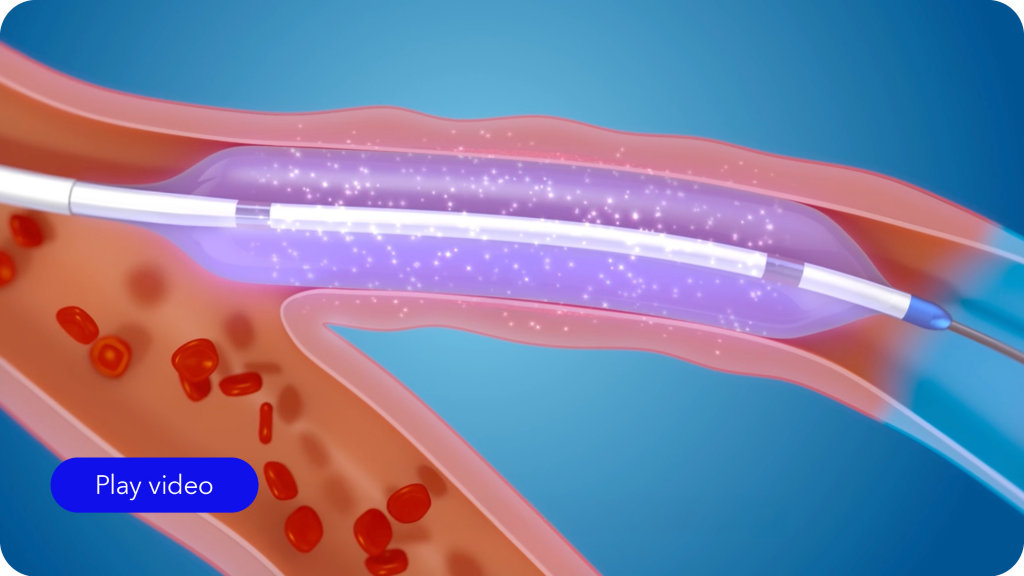
IN.PACT™ AV drug-coated balloon is the proactive AV maintenance treatment option that offers superior performance compared to PTA,1 fewer reinterventions,2 and a clear path for the dialysis lifeline.

AV access maintenance trials — target lesion primary patency†
IN.PACT™ AV DCB can extend the time between interventions by ~14.7 months1 — more than 5× longer than Lutonix™* DCB.3
† Primary patency endpoints are defined differently; results are from different studies and may vary in a head-to-head comparison; charts are for illustration purposes only.
Risks may include: pain; hemorrhage; arterial or venous aneurysm/thrombosis, dissection, infection, perforation, or rupture; loss of permanent access; allergic/immunologic reaction; and death.
Results from separate trials comparing drug-coated balloons to standard PTA for AV fistula maintenance


No statistical difference in all-cause mortality between PTA and IN.PACT™ AV DCB at 36 months1


† Primary patency endpoints are defined differently; results are from different studies and may vary in a head-to-head comparison; charts are for illustration purposes only.
Patients treated with IN.PACT™ AV DCB demonstrate a reduced need for reinterventions compared to PTA. This can help enable longer periods of uninterrupted dialysis and could keep patients out of the hospital longer, which may positively impact patients’ lives.2
Watch Dianne’s story to see how this proactive maintenance treatment helped decrease the number of maintenance procedures she needed, allowing her to focus on the things she loves most.

The IN.PACT™ AV DCB can slow the progression of fistula stenosis. A functioning fistula can eliminate the need for catheter-based dialysis, decreasing risk of infection and all-cause mortality.2
IN.PACT™ AV DCB minimizes the potential post-treatment limitations of stents, leaving a clear path for the dialysis lifeline.
TM* Third-party brands are trademarks of their respective owners.
† Primary patency endpoints are defined differently; results are from different studies and may vary in a head-to-head comparison; charts are for illustration purposes only.
‡ IN.PACT™ AV Access Trial: target lesion primary patency rate was defined as freedom from clinically driven target lesion revascularization (CD-TLR) or access circuit thrombosis measured through 36 months (1,080 days) post-procedure.
§ IN.PACT™ AV Access Trial: access circuit primary patency was defined as freedom from reintervention in the access circuit or access circuit thrombosis measured through 36 months (1,080 days) post-procedure.
◊ Lutonix™* AV Clinical Trial: target lesion primary patency was defined as freedom from clinically driven reintervention of the target lesion or access thrombosis measured through 24 months.
¶ Lutonix™* AV Clinical Trial: access circuit primary patency was defined as freedom from access circuit revascularization or access circuit thrombosis measured through 24 months.