
Life shouldn’t revolve around urgent bladder leaks
Sudden urges and unexpected leaks that derail your day may be signs of urge urinary incontinence (UUI), a common but treatable condition. Explore a Medtronic treatment option.
Sudden urges and unexpected leaks that derail your day may be signs of urge urinary incontinence (UUI), a common but treatable condition. Explore a Medtronic treatment option.
When urgent bladder leaks are always on your mind, it’s harder to focus on what matters most — time with family and friends, travel, or simply enjoying everyday life. Learning about advanced UUI treatment could be the first step toward less worry and getting back to the moments that matter most.

These may be signs of urge urinary incontinence, a condition that affects nearly 16 million people in the United States.1,2 While UUI is common, it doesn’t have to define your daily life. You are not alone. For more than 25 years, Medtronic has helped people understand bladder control treatment options and access advanced therapies.
Your bladder and brain work together to control urination. When communication between them is disrupted, your bladder may send urgent signals that are difficult to control.4,5
While bladder changes may become more common with age, the feeling of frequent urgency and urine leakage is not something you simply have to accept. There are treatment options that may help.
If you find yourself planning your day around your bladder instead of living your life, or worrying constantly about the nearest bathroom, it may be time to talk with a healthcare provider. Treatment may help reduce urgent leaks that affect your daily activities, confidence, and routines.
Many people start with lifestyle changes, medications, protective pads or underwear, but these may not work for everyone. For people whose symptoms persist, advanced therapies such as the Altaviva™ implant may be an option.
The Altaviva implant is an advanced treatment for urge urinary incontinence. It’s designed to stimulate the tibial nerve and help improve communication between the bladder and brain,6,7 which may help reduce urgency with leaks.8,9
Find out if it might be right for you.
Unlike medications or injections, the Altaviva™ implant is a long-term therapy†,10 that targets the tibial nerve that helps control normal bladder function.6,7 After a single procedure, the system automatically delivers treatment so you can focus on living your life.
†Based on clinical and bench testing for expected therapy settings.
In addition to risks related to surgery, complications can include pain at the implant site, lower leg pain, infection, wound complications, nerve injury, movement of the implant, undesirable change in bowel or bladder function, uncomfortable or unintended stimulation sensations, loss of therapeutic effect, discomfort when recharging, or technical or device problems. Please see Important Safety Information for more details. Talk with your doctor about ways to minimize these risks.
Hear about Anthony’s experience with advanced UUI treatment.
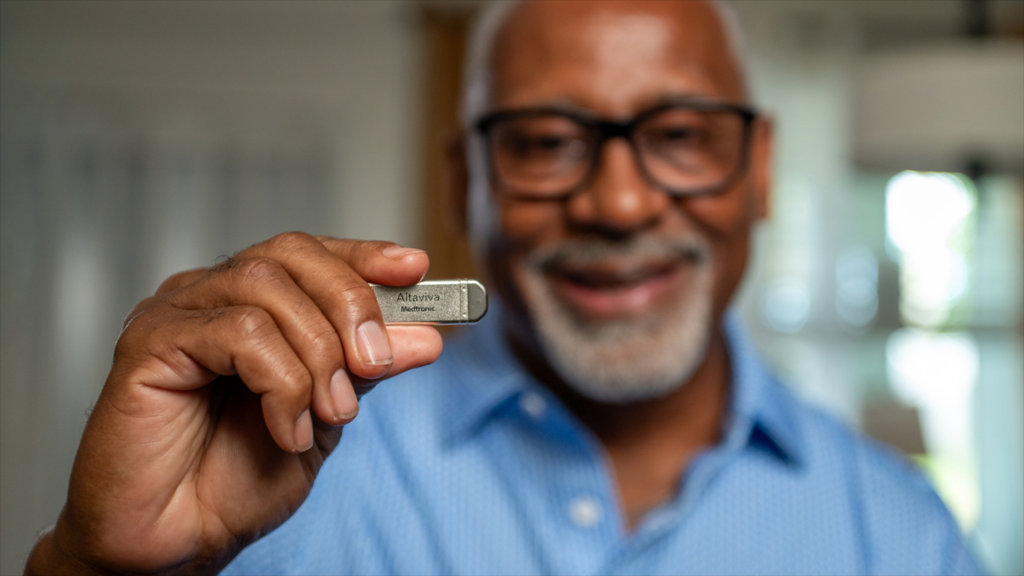
Individual results may vary. Talk to your doctor to see if the Altaviva™ system is right for you.
‡ Based on clinical and bench testing for expected therapy settings.
§ As assessed by the Patient Global Impression of Improvement (PGI I).
Adverse events related to the device, procedure, and/or therapy occurred in 20% of implanted subjects through 12-month follow-up. The most common types of related AEs were implant-related infections at the implant site (7%) and implant site pain (3%).


