Building a Flow Diverter is complex and trade offs are unavoidable. We are committed to developing standards and provide you with proven solutions offering low levels of braid deformation.
The Pipeline™ Embolization Device Family offers a comprehensive size range, with diameters from 2.5 mm to 5.0 mm in 0.25 mm increments and lengths up to 35 mm1. It also provides procedural flexibility, with the option to use an 021 microcatheter with Pipeline™ Vantage or an 027 microcatheter with Pipeline™ Flex with Shield Technology™1. Thus, providing tailored treatment options for diverse patient anatomies. The importance of "right size device" is critical when considering efficacy, safety, and braid change2.
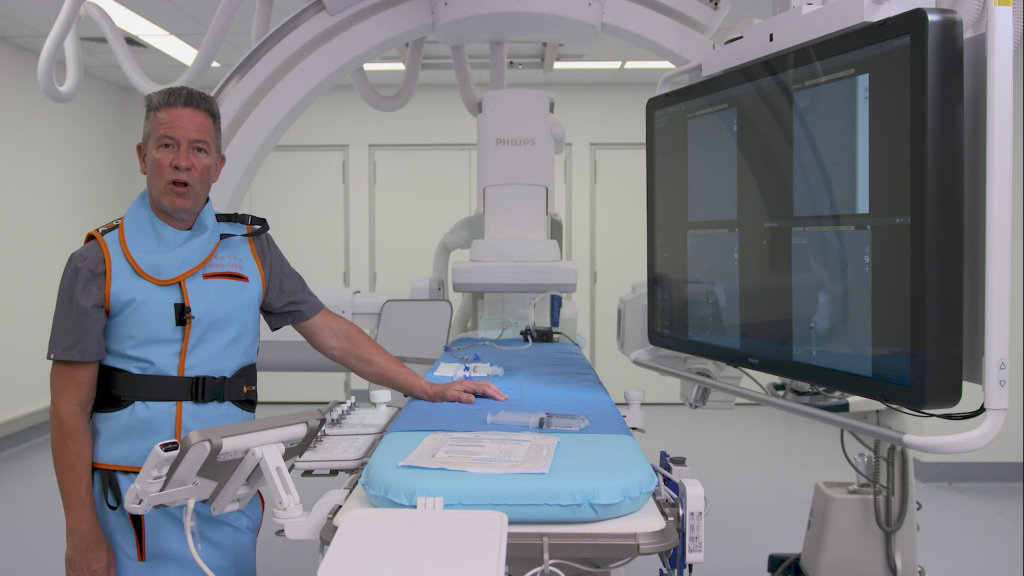
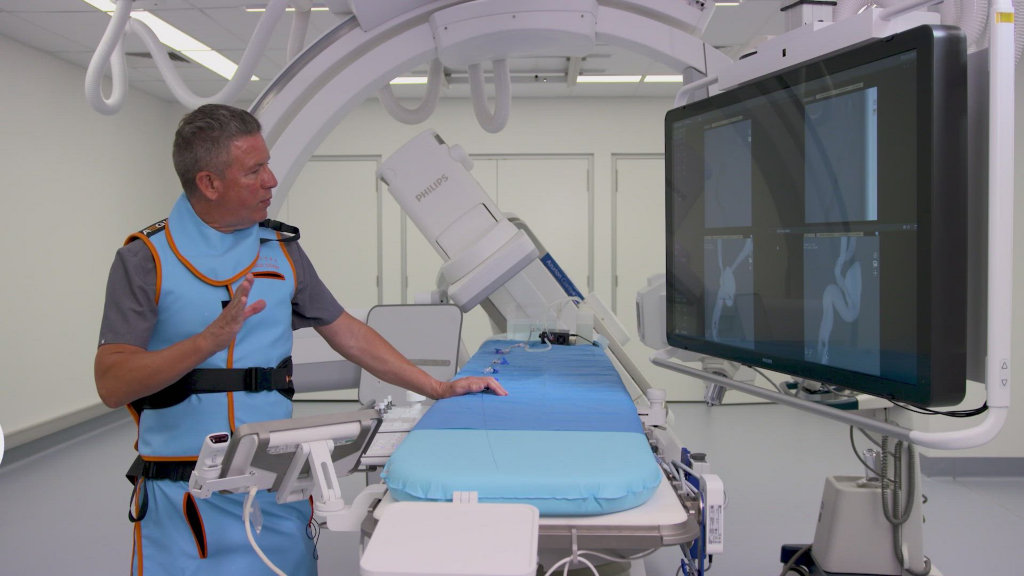
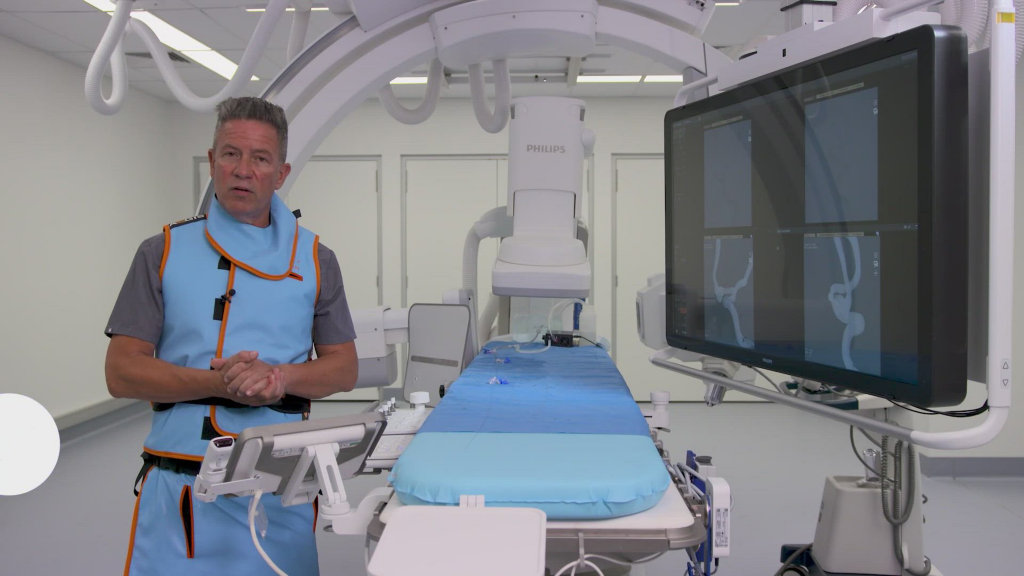
Pipeline™ deployment: How to
Pipeline™ Flex Embolization Device with Shield Technology™ (ICA 1)
Pipeline™ Flex Embolization Device with Shield Technology™ (ICA 2)
Pipeline™ Vantage Embolization Device with Shield Technology™
The Pipeline™ advantage
Like baking a cake, there are many ingredients that can be used and changing them alters the flavor.Material selection matters.
Pipeline™ flow diverters, are typically constructed from a braided mesh of cobalt-chromium and platinum alloy wires. The Pipeline™ Embolization Device and similar devices utilize this material for its biocompatibility and radiopacity for visualization during procedures). The advantage of this material composition lies in its ability to create a porous, yet robust, structure that effectively diverts blood flow away from the aneurysm while maintaining patency of the parent artery3.
Braided mesh design for flexibility and adaptability4
The braided mesh design allows for a high degree of flexibility and adaptability to the shape of the vessel, while maintaining a porous structure that allows blood to pass through but diverts flow from the aneurysm.
Cobalt chromium for better healing and efficacy5
Pipeline™ devices are made of Cobalt Chromium, which has higher tensile strength than Nitinol. This strength allows for thinner device braids, aiding in neointimal healing.
The aim when using a nitinol flow diverter, is to place a stent. The aim when placing a cobalt chromium flow diverter, is to reconstruct an artery”
— Prof. Hal Rice Gold Coast University Hospital, Australia
References:
Pipeline™ Vantage Embolization Device with Shield Technology™ device IFU; M067713CDOC2_B. Pipeline™ Flex Embolization Device with Shield Technology™ device IFU; M053137CDOC2_B
F. Mut, J.R. Cebral Effects of Flow-Diverting Device Oversizing on Hemodynamics Alteration in Cerebral Aneurysms American Journal of Neuroradiology Nov 2012, 33 (10) 2010-2016; DOI: 10.3174/ajnr.A3080 Epub 2012 May 3. PMID: 22555581; PMCID: PMC7964605.
Oliver AA, Senol YC, Bilgin C, Schaffer JE, Kadirvel R, Kallmes DF, Wainwright JM. Intraluminal Flow Diverter Design Primer for Neurointerventionalists. AJNR Am J Neuroradiol. 2024 Apr 8;45(4):365-370. doi: 10.3174/ajnr.A8076. PMID: 38164542; PMCID: PMC11288553.
Dandapat S, Mendez-Ruiz A, Martínez-Galdámez M, Macho J, Derakhshani S, Foa Torres G, Pereira VM, Arat A, Wakhloo AK, Ortega-Gutierrez S. Review of current intracranial aneurysm flow diversion technology and clinical use. J Neurointerv Surg. 2021 Jan;13(1):54-62. doi: 10.1136/neurintsurg-2020-015877. Epub 2020 Sep 25. PMID: 32978269.
Dibas M, Vivanco-Suarez J, Lopes DK, Hanel RA, Rodriguez-Calienes A, Cortez GM, Fifi JT, Devarajan A, Toth G, Patterson TE, Altschul D, Pereira VM, Liu XYE, Puri AS, Kühn AL, Guerrero WR, Khandelwal P, Bach I, Kan PT, Edhayan G, Martinez-Galdamez M, Given C, Gross BA, Narayanan S, Galecio-Castillo M, Derakhshani S, Ortega-Gutierrez S. Use of Cobalt-Chromium 64 Wires Surpass Evolve for the Treatment of Remnant Intracranial Aneurysms: A Subanalysis From the SEASE International Registry. Stroke Vasc Interv Neurol. 2025 Jan 4;5(2):e001470. doi: 10.1161/SVIN.124.001470. PMID: 41573176; PMCID: PMC12671630.
D00526089_B_COF & RRF + Supporting Excel COF and RRF for 325 500 devices
Pipeline™ Flex Embolization Device with Shield Technology™ (ISW)
Pipeline™ Vantage Embolization Device with Shield Technology™ (ISW)