No Image Available

Electrosurgical dissectors

PlasmaBlade™ X dissection device

<p>The PlasmaBlade™ X device uses a 99.5%-insulated electrode to cut and coagulate soft tissue with radiofrequency energy during surgical procedures.</p>

Features

All PlasmaBlade™ X dissection devices offer:

  • Non-stick coating for easy cleaning
  • Proprietary generator for consistent, reliable flow of energy
  • Steady thermal control for performance in wet or dry field

Additionally, certain PlasmaBlade™ X dissection device models have been customized to meet specific surgeon needs, with features such as:

  • Integrated smoke evacuation for improved visibility and safety4
  • Telescoping shaft for improved access
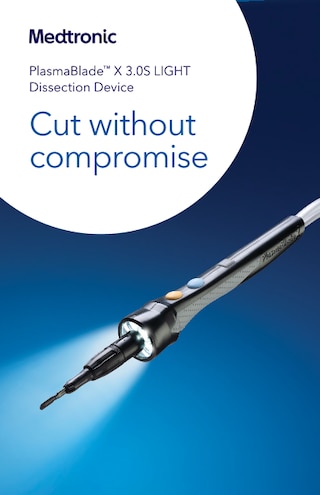
  • Integrated light for broad illumination of the surgical pocket

Lower temperature

Operates at temperatures up to 64% lower than traditional electrosurgery on cut settings4

Improved healing

Demonstrates reduced inflammatory response following skin incision and healed scar width compared to traditional electrosurgery2

Less surgical smoke

Produces 95% less surgical smoke than traditional electrosurgery on cut settings


Increased efficiency

Maintains cutting effectiveness and hemostatic ability when submerged in liquid fat or blood5


Reduced thermal damage

Produces 74% less thermal damage than traditional electrosurgery2

Decreased drainage

Reduces drainage duration and volume in mastectomy patients6


PlasmaBlade™ X family of products

PlasmaBlade™ X dissection device family

Closeup of the four PlasmaBlade X handpieces.

AEX™ generator
 

The AEX generator is a radio frequency (RF) electrosurgical generator designed to power both Aquamantys™ (bipolar sealing) and PlasmaBlade™ (soft‑tissue dissection) devices.

Lower temperatures. Less damage.

PlasmaBlade™ X dissection devices use less total energy and operate at significantly lower temperatures than traditional electrosurgery.

  • 64% lower operating temperature for cutting†,4
  • 45% lower operating temperature for coagulation†,1,2,4
  • 74% reduced thermal injury depth2

PlasmaBlade™ X dissection device: 40–170°C

Operating temperature profile of the PlasmaBlade device dissection device using infrared imaging.


Traditional electrosurgery: 200–350°C

Operating temperature profile of traditional electrosurgery using infrared imaging.


Ordering information

PlasmaBlade™

Item number Description
PS210-030S-LIGHT PlasmaBlade™ X 3.0S LIGHT
PS210-030S PlasmaBlade™ X 3.0S
PS200-041S PlasmaBlade™ X 4.0S
PS200-040 PlasmaBlade™ X 4.0
40-405-1 AEX™ generator

† Operating temperature is a function of device settings, electrode configuration and treatment time. Operating temperatures outside this range may be observed.
  1. Loh SA, Carlson GA, Chang EI, Huang E, Palanker D, Gurtner GC. Comparative healing of surgical incisions created by the PEAK PlasmaBlade, conventional electrosurgery, and a scalpel. Plast Reconstr Surg. 2009;124(6):1849–1859.
  2. Ruidiaz ME, Messmer D, Atmodjo DY, et al. Comparative healing of human cutaneous surgical incisions created by the PEAK PlasmaBlade, conventional electrosurgery, and a standard scalpel. Plast Reconstr Surg. 2011;128(1):104–111.
  3. Ekin M, Dagdeviren H, Caypinar SS et al. Comparative cosmetic outcome of surgical incisions created by the PEAK Plasma Blade and scalpel after cesarean section by Patient and Observer Assessment Scale (POSAS): A randomized double blind study. Taiwan J Obstet Gynecol. 2018; Feb 57 (1):68–70.

  1. Medtronic data on file.
  2. Palanker DV, Vankov A, Huie P. Electrosurgery with Cellular Precision. IEEE Transactions of Biomedical Engineering. 2008;55(2):838–814.
  3. Dogan L, Gulcelik MA, Yuksel M, et al. The effect of plasmakinetic cautery on wound healing and complications in mastectomy. J Breast Cancer. 2013;16(2):198–201.