Guardian™ 4 sensor: insertion in the arm for best performance and longest wear
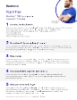
Rob performs an arm insertion of a Guardian™ 4 sensor - (3:36)
Watch to see #MedtronicChampion Rob Howe demonstrate a Guardian 4 sensor insertion!
Getting Started with Medtronic CGM
CGM - insertion, programming and Quick Start - (13:42)
Topics include: starting CGM with your MiniMed™ 780G, sensor insertion, alert setup & when to use a BG.
More information (see more)
Less information (see less)
ANSWERS TO COMMON QUESTIONS
- What is a glucose sensor?
- Do I still need to do fingerstick readings if I use glucose sensors?
- Where should I wear a glucose sensor?
- How long do glucose sensors last? Do they expire?
- What is the warranty on my transmitter?
- How do I renew my out-of-warranty Guardian™ 4 Transmitter?
- How do I pair my new transmitter?
- What type of batteries does the transmitter use?
- I have insurance - can you tell me if they cover sensors?
- How can I replace a lost sensor?
What is a glucose sensor?
A glucose sensor is a tiny electrode that measures your glucose levels. It sits under the skin in your interstitial fluid. Glucose sensors are easily inserted using an automatic insertion device: a needle is used to insert the glucose sensor. The needle is then removed leaving just the tiny flexible electrode under the skin. The glucose sensor is then connected to a transmitter so that readings can be transmitted to your insulin pump.
Do I still need to do fingerstick readings if I use glucose sensors?
When using the MiniMed™ 780G with Guardian™ 4 sensor, there are no fingersticks required with SmartGuard™ technology**. There are times when it is appropriate to enter a fingerstick BG into the MiniMed™ 780G system, or when the system may sometimes request one. You should use a reading from a BG meter instead of a sensor glucose reading in certain cases. Please review the "CGM - insertion, programming and quick start video" above to learn more. When using the Guardian™ Sensor (3), calibrations in the form of a BG by fingerstick are required at least every 12 hours. When using either sensor not in SmartGuard™ tech, a BG reading should be used before making treatment decisions.
**A blood glucose (BG) reading is needed to enter SmartGuard™. If symptoms don’t match alerts & readings, use a BG meter. Refer to user guide.
Guardian™ Sensor (3)

Guardian™ 4 sensor

Although indicated in multiple areas depending on age, it has been found that wearing the Guardian™ 4 sensor on the back of the upper arm may provide the best sensor life and experience. Therefore, it is the recommendation that patients first try insertion on the back of the arm, if they are able to do so.
How long do sensors last? Do they expire?
Both the Guardian™ 4 sensor and Guardian™ Sensor (3) can be worn for up to 7 days. Remember, the transmitter is re-usable and should be re-charged after each sensor wear.
What is the warranty on my transmitter?
Both the Guardian™ 4 transmitter and Guardian™ Link (3) transmitters come with a 12-month warranty.
What type of batteries does the transmitter use?
Both the Guardian™ 4 transmitter and Guardian™ Link (3) Transmitters have a self-contained battery, which can be recharged using the charger supplied, but cannot be changed. As it has a selfcontained battery, the transmitter should be disposed of, or recycled, in accordance with local governing ordinances and recycling guidelines.
How do I renew my out-of-warranty Guardian™ 4 Transmitter?
If your Guardian™ 4 Transmitter is out of warranty or will expire soon, you can request a renewal through your MiniMed™ eShop account. Look for the “Guardian 4 Transmitter Renewal” offer under your Exclusive Deals, add it to your cart, and complete your order.
How do I pair my new transmitter?
- Attach the transmitter to the charger.
- On your pump, from the Home screen, open the Menu and go to the devices settings.
- Place the transmitter, still attached to the charger, next to the pump.
- Select Pair New Device. The Searching screen appears.
- Remove the transmitter from the charger. The transmitter light flashes 10 times, then turns off. The Select Device screen appears with a list of available devices.
- Select the CGM device that matches the serial number on the back of the transmitter.
- Check that the serial number on the pump screen matches the serial number on the transmitter. Select Confirm. Use Back if the number is incorrect.
Success message: If the connection completes, the pump shows Pairing successful!
I have insurance - can you tell me if sensors are covered?
Yes. We can help with our complementary insurance verification service. Please call us at 1-800-284-4416 (choose option 2 for sensor insurance coverage) or complete the online form to get started.
How can I replace a lost sensor?
Request a replacement through our Sensor Replacement Form
Alternatively you can call our HelpLine at 1-800-284-4416, option 1 for troubleshooting and replacements of lost sensors.


1
For the Guardian Sensor (3), for persons 7 to 13 years of age, sensor placement and insertion has been studied in the belly (abdomen) and buttock only and is not approved for other sites. For persons that are 14 years of age and older, sensor placement and insertion has been studied in the belly (abdomen) and back of upper arm only and is not approved for other sites.
Information on this site should not be used as a substitute for talking with your doctor. Always talk with your doctor about diagnosis and treatment information.