
Ventilator associated events
MedEd Bytes*
MedEd Bytes*
MedEd Bytes is a video series that offers a quick and digestible learning format that can help solidify your understanding of different therapies leveraged in patient monitoring and respiratory interventions. In this series, we’ll cover topics such as capnography waveforms, the technology behind pulse oximetry, modes of ventilation, and more. To stay up to date with the series, please subscribe to our YouTube channel or start watching the series below.
The ventilator associated event (VAE) surveillance criteria is designed to capture infectious and non-infectious complications associated with mechanical ventilation.1 It is estimated that around 30% of ventilated patients in the ICU develop a VAE.1 VAEs can lead to serious complications, including death.1
In the following bytes, we will review how VAEs are diagnosed, outline the types of VAEs, discuss the methods for preventing VAEs, and consider the methods for VAE surveillance.
A ventilator associated event is a complication or infection occurring in patients receiving invasive mechanical ventilation that is severe enough to cause respiratory worsening.1
03:33
The definition or trigger of a VAE is a generalizable change and increase in mechanical ventilation support after a period of stability or decreasing support.1
02:49
VAEs are stratified into tiers of complication types called ventilator-associated condition (VAC), infection-related ventilator-associated complications (IVAC), or possible ventilator-associated pneumonia (pVAP).1
02:48
There are three main methods by which VAEs can be decreased: avoiding intubation, minimizing the duration of intubation, and targeting those conditions that are closely associated with or can trigger a VAE.2-4
02:59
The VAE surveillance criteria uses quantitative variables that may be incorporated into the electronic medical record, making computerized VAE surveillance feasible.5
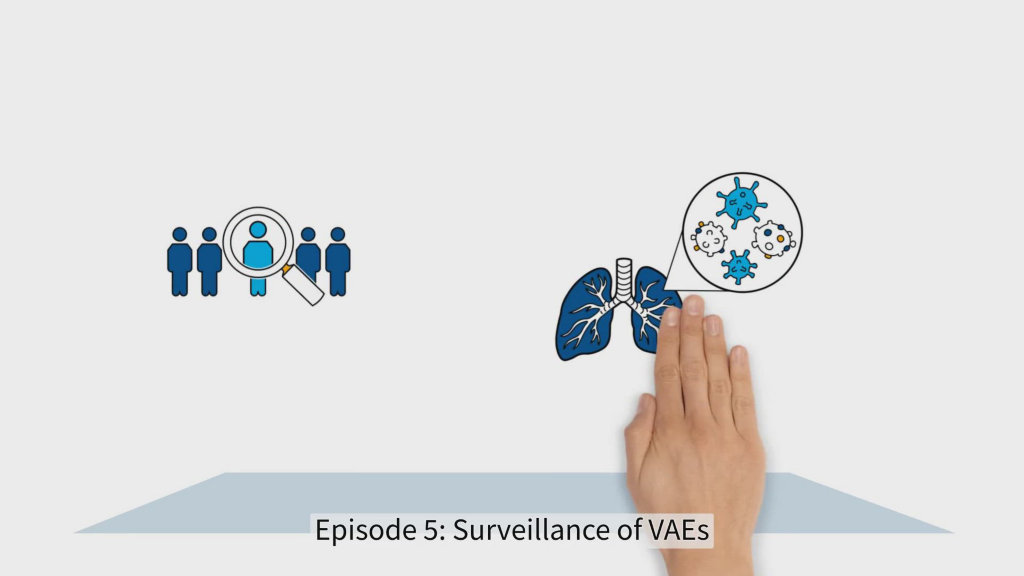
02:45
* This material is educational/training only, and products may not be licenced as per Canadian law.
We do not review or control the content of external sites and are not responsible for any interactions or transactions that may occur there. Any product availability and regulatory requirements on the destination site may differ depending on your location. When you continue, the terms of use and privacy statement of the external site will apply.