
This is Aortic Disease Awareness Month. 

Take the quiz to learn about Abdominal Aortic Aneurysm (AAA) risk factors and explore the section below.


The risk factors

If you are a 65-year-old male with one or more of the four other risk factors consult your doctor.

Aged 65+

Smoking

High blood pressure

Family history

Atherosclerosis


What is an Abdominal Aortic Aneurysm (AAA)?

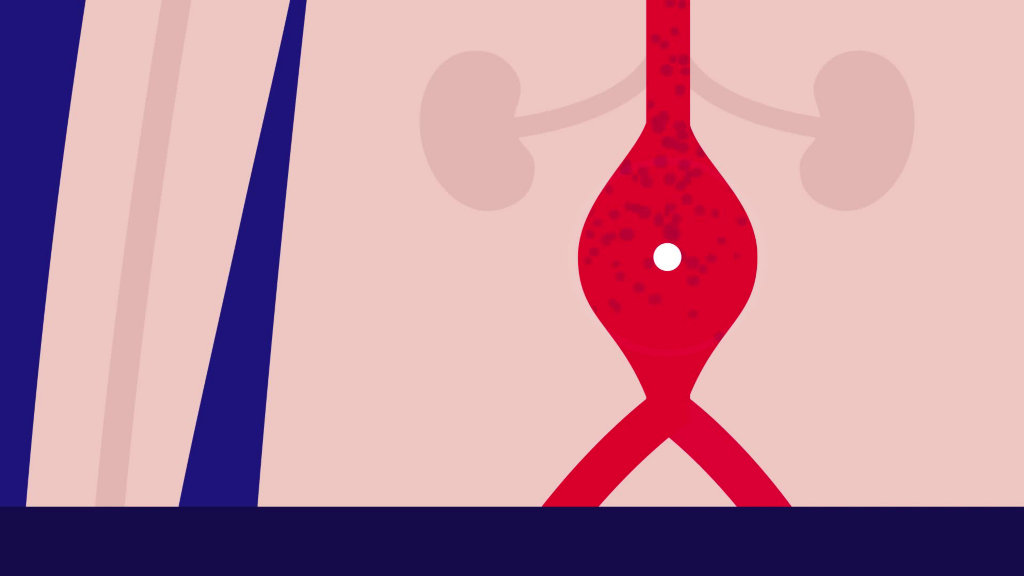
The abdominal aorta is located in the abdomen. It’s the largest blood vessel in the body and it carries blood away from the heart. An aneurysm is the bulging or ballooning of a weakened area of a blood vessel.

An Abdominal Aortic Aneurysm (AAA) is like a small balloon in the abdomen. It may silently and slowly grow. The more it grows and the more the walls of the aorta are stressed, the greater the possibility it could rupture all of a sudden.


What are the symptoms of an Abdominal Aortic Aneurysm (AAA)?

Most AAA's have no symptoms. Medical examinations sometimes uncover a pulsating mass in the abdomen. Often, aneurysms are discovered by ‘accident’ when a patient has an imaging examination such as a CT scan, MRI scan or ultrasound for another condition.

Severe, sudden pain in the abdomen or back is a sign of a bursting Abdominal Aortic Aneurysm (AAA). Pain may spread to the groin, legs or buttocks. Clammy skin, dizziness, rapid heart rate, passing out and shock are also signs.


How is an Abdominal Aortic Aneurysm (AAA) diagnosed?

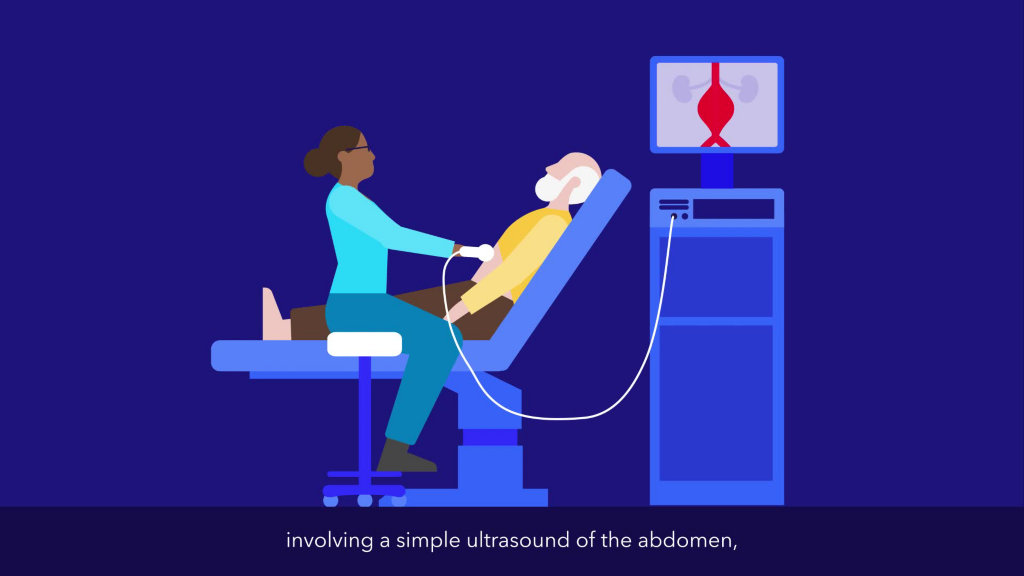
Most AAA’s can be detected through an ultrasound screening. The screening test is quick and painless, involving a simple ultrasound of the abdomen, similar to a pregnancy ultrasound.


Abdominal Aortic Aneurysm (AAA) treatment options

Endovascular treatment (EVAR)

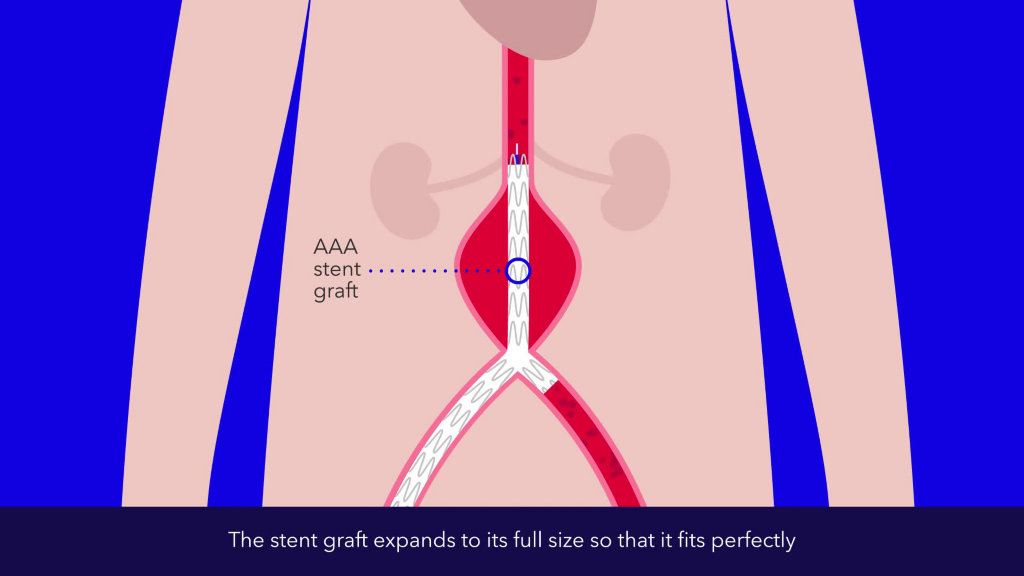
This is a minimally invasive procedure. A stent graft is placed inside the aneurysm without surgically opening the tissue surrounding it.

Open surgery treatment

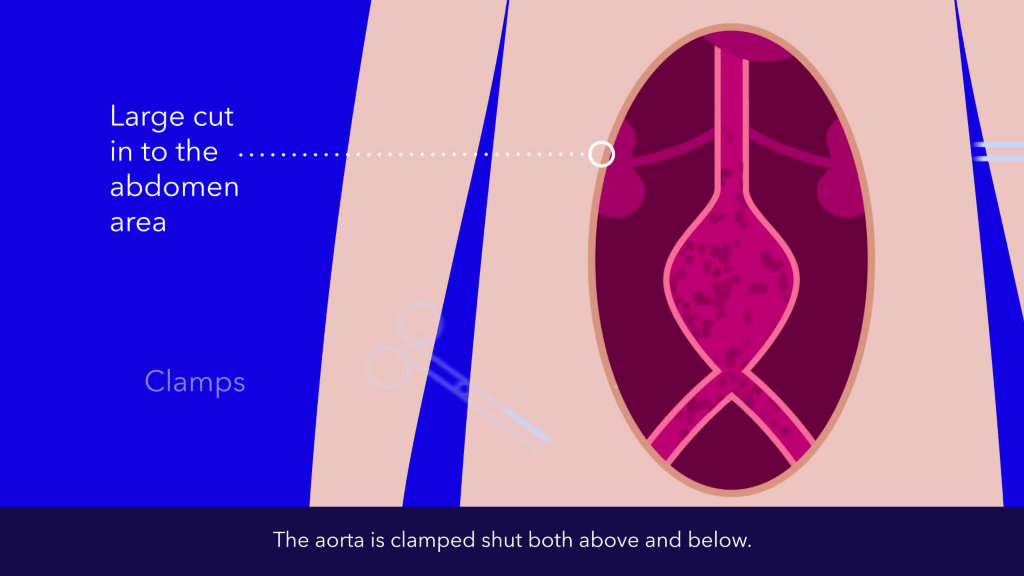
In this treatment option, your doctor repairs the aorta by making a large cut in the abdomen, removing the aneurysm and replacing it with a graft.

Endovascular treatment (EVAR)

A stent graft is placed inside the aneurysm without surgically opening the tissue surrounding it. The stent graft is a fabric tube supported by a metal framework.This procedure is typically performed under local, regional or general anesthesia. It takes about one to three hours to complete. 

Patients usually spend a few hours in the intensive care unit, remain in the hospital for one to two days and need four to six weeks to recover completely.


Open surgery treatment

The aneurysm section of the aorta is removed and replaced with a fabric graft, which will act as a replacement blood vessel. The blood flow through the aorta is stopped while the graft is sewn into place. Open surgery is typically performed under general anesthesia. It takes about three to four hours to complete.

Patients usually spend one to two days in an intensive care unit, remain in the hospital for at least one week and may require two to three months to recover completely.


Patient story

Discover Hans Kazàn's story about Abdominal Aortic Aneurysm (AAA).

Worldwide, approximately 2.4 million people suffer from an abdominal aneurysm. One of them is a magician, entertainer and television presenter in the Netherlands, Hans Kazàn. He was diagnosed with an aortic aneurysm during a heart examination and had no complaints up to that point. A few days after the 'silent killer' was discovered, he was operated and is still amazed at the speed with which the surgery was performed: 

"How is it possible that such an important, life-saving operation can be performed so quickly, so flawlessly and so painlessly?"

Benefits and risks

Benefits and risks are associated with both treatment options. You should talk with your doctor about which option is best for you. See our patient guide for more details. 

Warning signs

  • Pain, numbness, coldness or weakness in legs or buttocks
  • Any back, chest, abdominal or groin pain
  • Dizziness, fainting, rapid heartbeat or sudden weakness

Follow-up

It’s important to schedule regular follow-up visits with your doctor. Follow-up visits will help the doctor check your aneurysm and stent graft on a regular basis. Most often these will occur at one month, one year, and annually thereafter.


Download patient guide

With the support of the European Society for Vascular Surgery - ESVS