
Safer sedation given with greater confidence
Procedural sedation
Procedural sedation
During procedural sedation, there’s often a concern that a sedated patient’s spontaneous ventilation may become inadequate. And clinical evidence suggests that a patient’s sedation level does not remain stable during a procedure, and may change dangerously from moderate to deep1 – which can have an impact on their ability to breathe.
When you consider that only half of moderately sedated patients achieve their target level of sedation2, and that similar patients can react differently to a similar sedative dose, the risks become more apparent.
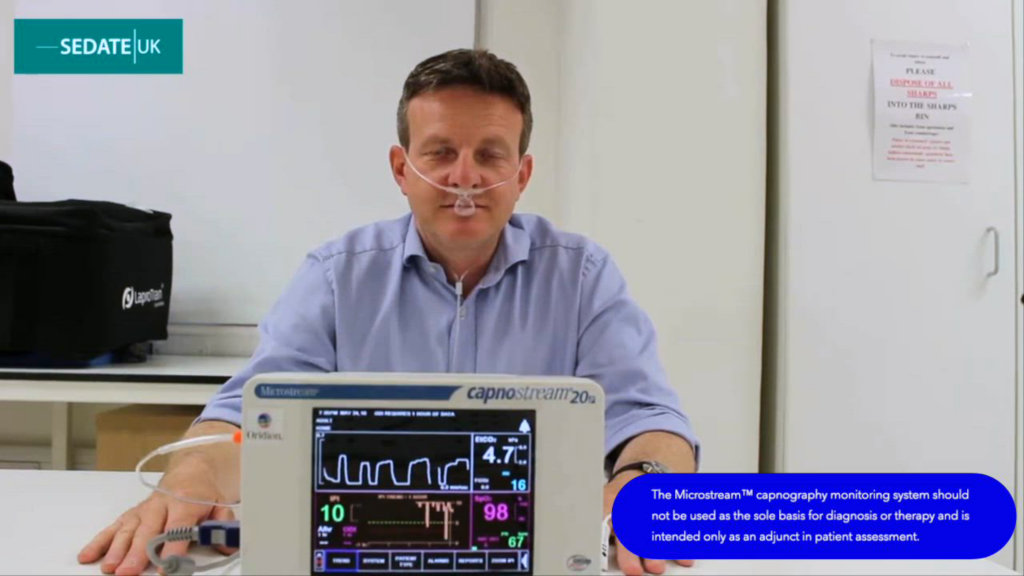
In the past, there has been some confusion about the advice of clinical societies with regard to capnography. However, there is a growing wave of societies recommending continuous capnography along with pulse oximetry, as an alert to changes in oxygenation and ventilation – two key factors in detecting respiratory related adverse events in their early stages.4
In fact, more than 65 scientific and clinical societies now consider capnography as the standard of care – and recommend its use during procedural sedation.4

To help you understand the advice, Medtronic has produced an eBook on Clinical Society Guidelines for Capnography Monitoring, enabling you to:
Contact us to learn more about the solutions Medtronic has available: we can help you understand the positive impact that effective capnography monitoring could have on your organisation, and the patients you care for.
Despite respiratory events being the most common adverse event associated with procedural sedation1, there are still objections to the use of capnography on the grounds of cost.5
But in fact, when compared to the possible economic burden linked to respiratory adverse events, capnography is overall cost-saving – with one study quantifying a saving of €55 per 100 patients.5
Contact us to learn more about the solutions Medtronic has available: we can help you understand the positive impact that effective capnography monitoring could have on your organisation, and the patients you care for.
The material on this website should not be considered the exclusive source of information, it does not replace or supersede information contained in the device manual(s).
Please note that the intended use of a product may vary depending on geographical approvals.
See the device manual(s) for detailed information regarding the intended use, the implant procedure, indications, contraindications, warnings, precautions, and potential adverse events.
For a MRI compatible device(s), consult the MRI information in the device manual(s) before performing a MRI.
If a device is eligible for eIFU usage, instructions for use can be found at Medtronic’s website manuals.medtronic.com.
Manuals can be viewed using a current version of any major internet browser. For best results, use Adobe Acrobat® Reader with the browser.
Medtronic products placed on European markets bear the CE mark and the UKCA mark (if applicable).
For any further information, contact your local Medtronic representative.
We do not review or control the content of external sites and are not responsible for any interactions or transactions that may occur there. Any product availability and regulatory requirements on the destination site may differ depending on your location. When you continue, the terms of use and privacy statement of the external site will apply.
Product availability and regulatory requirements may differ depending on your location. The destination website is governed by the laws and regulations of the country in which it operates, which may be different from those in your country. When you continue, the terms of use and privacy statement of the destination Medtronic site will apply.