
Visualase™ laser ablation. Small incision. Big difference.
The minimally invasive alternative to open brain surgery that means less time in hospital, and more time making memories.

The minimally invasive alternative to open brain surgery that means less time in hospital, and more time making memories.
If medication isn’t working for you, there’s still hope. Visualase™ laser ablation uses MRI images to guide a small catheter to the exact location of the seizure focus. This precision ensures only the problematic tissue is targeted, protecting healthy tissue nearby.
As with any surgical procedure, there can be risks associated with Visualase MRI-guided Ablation. Be sure to discuss the safety and potential risks of this therapy with your doctor. A prescription is required. This therapy is not for everyone. Individual results may vary.
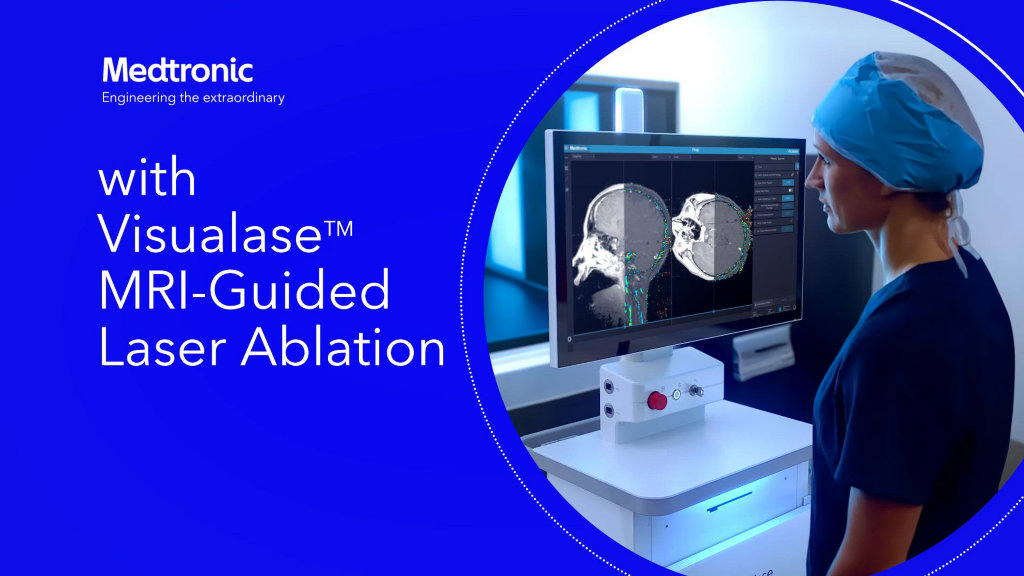
Brain surgery doesn’t have to mean a lengthy recovery period. With nearly 20 years of experience, we help you get back to what matters most – spending time with the people you love.
Your physician will get all the precise information they need to ensure they have everything ready for your procedure.
Laser ablation is typically inserted in a surgical room before the ablation is performed in an MRI under general anesthesia.
You can get back to living life sooner with Visualase™, with lower infection risk9,10, shorter hospital stays1-8 and lower 30-day readmission rates11,12 than open brain surgery.
Visualase™ has already changed the lives of over 11,000 people with focal epilepsy and brain tumors. While it’s not suitable for everyone, this simple checklist can help you explore whether it might be a good fit for you. The best way to find out what’s right for your specific situation is to talk to your doctor.
Hear first-hand how Visualase™ has given John the freedom to enjoy his passions again.
“Now I can drive a car and get my driver’s license. That is true freedom”
— John, 18. Patient with focal epilepsy

This video expresses individual experiences with Medtronic Visualase™ laser ablation. Not everyone who receives Visualase™ laser ablation will receive the same results.
Medtronic provides results based on proximity to the search criteria. The results shown here are populated by your selections and may not include the full list of available providers.
Medtronic provides this listing to assist indicated patients’ access to care. Medtronic has no vested interest in any specific provider, nor do we provide any recommendation, assurance, or guarantee with respect to their service. Medtronic does not verify or monitor the license, credentials, accreditations or qualifications of any provider listed in the Physician Finder. Information on this site should not be used as a substitute for physician consultation. Patients should always talk with their provider about diagnosis and treatment information. The list of providers may not include all of those in your area who are qualified to deliver care. There is no cost associated for providers to be included on this list. Some providers on this list may purchase products from Medtronic or may act as paid consultants to Medtronic.
We've put together some things to consider when talking with your physician.
