
The future of TAVI starts with you
Evolut™ built for a lifetime of care
Evolut™ built for a lifetime of care
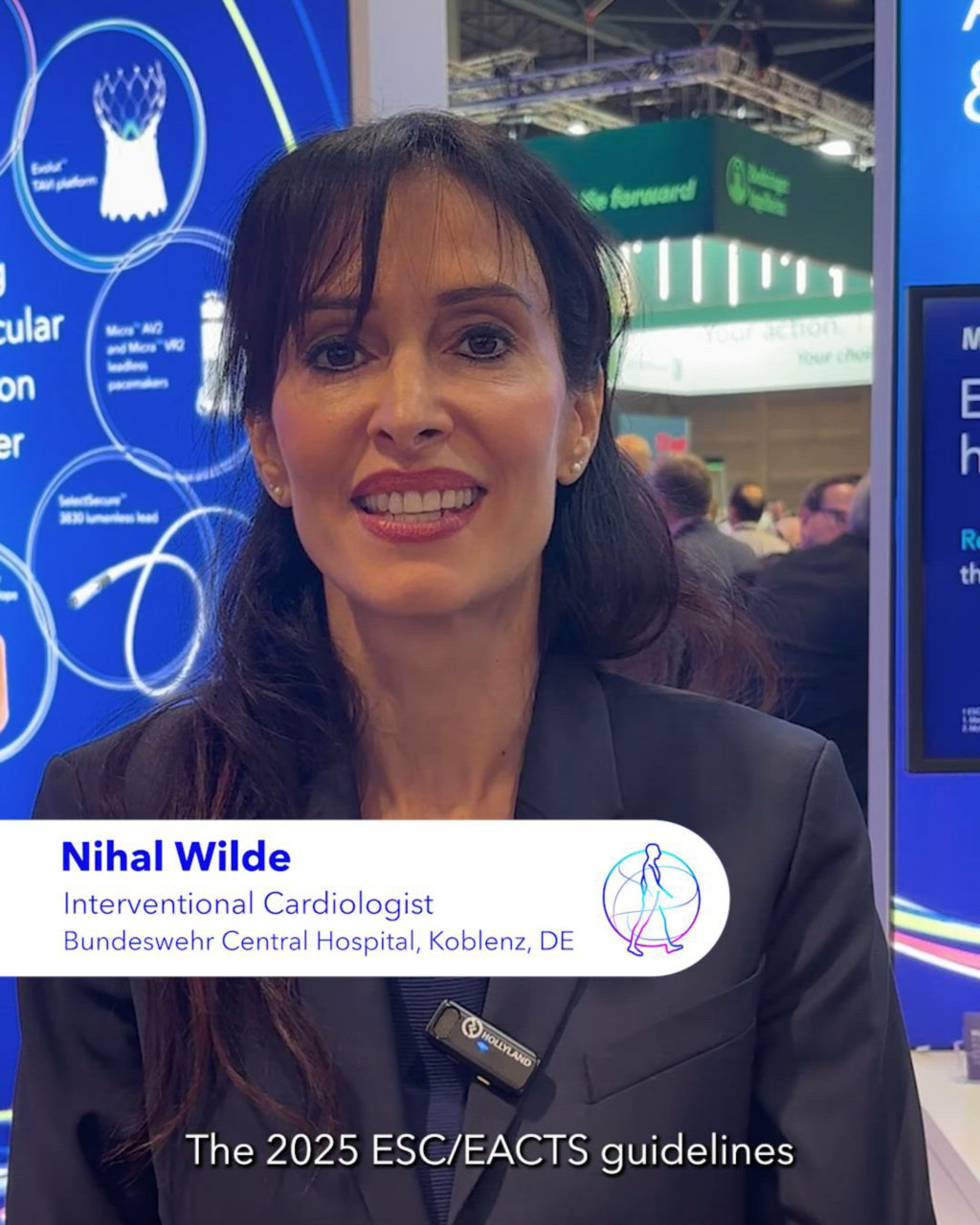
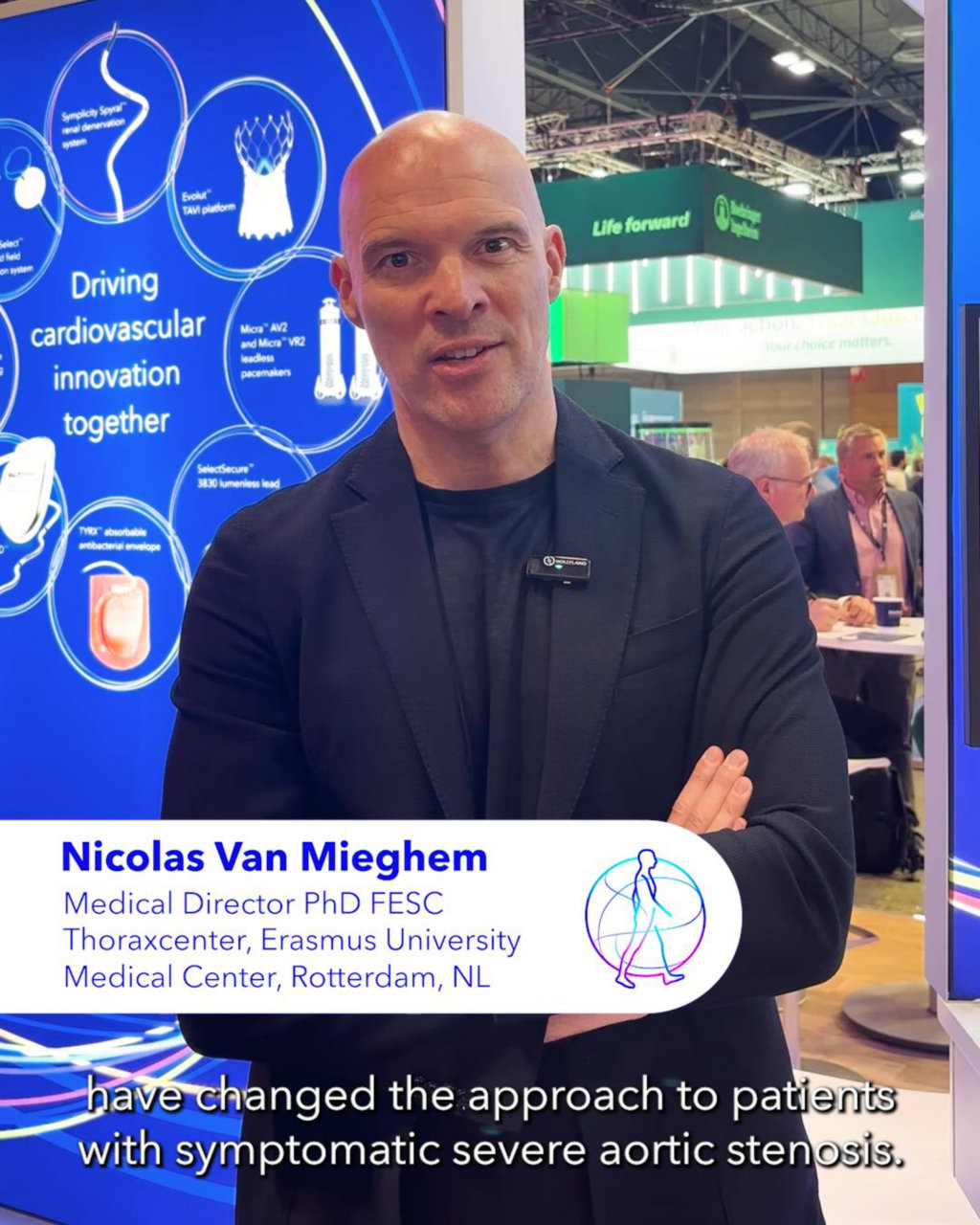
The 2025 ESC/EACTS VHD guidelines set new directions in the management of aortic stenosis, expanding the role of transcatheter aortic valve implantation (TAVI) to a broader patient population.
For the first time, the guidelines recommend TAVI in younger patients and emphasize a patient-centered approach, with decisions made through a multidisciplinary Heart Team. Importantly, the guidelines highlight the need for lifetime management strategies, ensuring optimal valve therapy not just at the time of treatment, but across the patient’s future health journey.
Get your concise overview of the key aortic stenosis (AS) updates from the 2025 ESC/EACTS VHD guidelines.

TAVI is recommended ≥70 years with tricuspid Aortic Stenosis (AS) if the anatomy is suitable.

Decision based on clinical, anatomical and procedural factors, including lifetime management considerations and estimated life expectancy.

TAVI may be considered for the treatment of severe bicuspid aortic valve stenosis in patients at increasing surgical risk, if the anatomy is suitable.
The Heart Team recommendation regarding the treatment and its modality must be based on evidence and anatomical considerations, balancing the risks and benefits of available treatment options. The patient and patient’s relatives need to be well informed about the rationale leading to the Heart Team recommendation, and given ample time to share personal preferences. At the end of the process, a shared decision is made between the treating team and the informed patient and relatives.”—




*The Evolut™ TAV system is not indicated for patient with asymptomatic aortic stenosis
The information in this document is intended for educational purposes based on an identified need, it is not meant to constitute medical advice or in any way replace the ESC/EACTS guidelines or the independent medical judgment of a trained and licensed physician with respect to any patient needs or circumstances. Please refer to full ESC/EACTS guidelines for detailed explanation of patient populations. The physician is solely responsible for all decisions and medical judgments relating to the treatment of their patients.
Fabien Praz, (ESC Chairperson) (Switzerland), Michael A. Borger, (EACTS Chairperson) (Germany), Jonas Lanz , (ESC Task Force Co-ordinator) (Switzerland), Mateo Marin-Cuartas, (EACTS Task Force Co-ordinator) (Germany), Ana Abreu (Portugal), Marianna Adamo (Italy), Nina Ajmone Marsan (Netherlands), Fabio Barili (Italy), Nikolaos Bonaros (Austria), Bernard Cosyns (Belgium), Ruggero De Paulis (Italy), Habib Gamra (Tunisia), Marjan Jahangiri (United Kingdom), Anders Jeppsson (Sweden), Robert J.M. Klautz (Netherlands), Benoit Mores (Belgium), Esther Pérez-David (Spain), Janine Pöss (Germany), Bernard D. Prendergast (United Kingdom), Bianca Rocca (Italy), Xavier Rossello (Spain), Mikio Suzuki (Serbia), Holger Thiele (Germany), Christophe Michel Tribouilloy (France), Wojtek Wojakowski (Poland), and ESC/EACTS Scientific Document Group, 2025 ESC/EACTS Guidelines for the management of valvular heart disease: Developed by the Task Force for the management of valvular heart disease of the European Society of Cardiology (ESC) and the European Association for Cardio-Thoracic Surgery (EACTS), European Heart Journal, 2025; ehab395.
a Integrative imaging assessment of AS (Figure 6).
b Confirmed by a normal exercise test, if feasible.
c AVCS >2000 in men, >1200 in women.
d More than three times age- and sex-corrected normal range.
e Educate patient and reassess at least every 6 months (or promptly if symptoms occur).
f Heart Team assessment based upon individual patient factors. Dashed arrow only applies to asymptomatic patients
The material on this website should not be considered the exclusive source of information, it does not replace or supersede information contained in the device manual(s). Please note that the intended use of a product may vary depending on geographical approvals. See the device manual(s) for detailed information regarding the intended use, the implant procedure, indications, contraindications, warnings, precautions, and potential adverse events. For a MRI compatible device(s), consult the MRI information in the device manual(s) before performing a MRI. If a device is eligible for eIFU usage, instructions for use can be found at Medtronic’s website manuals.medtronic.com. Manuals can be viewed using a current version of any major internet browser. For best results, use Adobe Acrobat® Reader with the browser. Medtronic products placed on European markets comply with EU and UK legislation (if applicable) on medical devices. For any further information, contact your local Medtronic representative.
We do not review or control the content of external sites and are not responsible for any interactions or transactions that may occur there. Any product availability and regulatory requirements on the destination site may differ depending on your location. When you continue, the terms of use and privacy statement of the external site will apply.
Product availability and regulatory requirements may differ depending on your location. The destination website is governed by the laws and regulations of the country in which it operates, which may be different from those in your country. When you continue, the terms of use and privacy statement of the destination Medtronic site will apply.