No Image Available

Insertable cardiac monitors

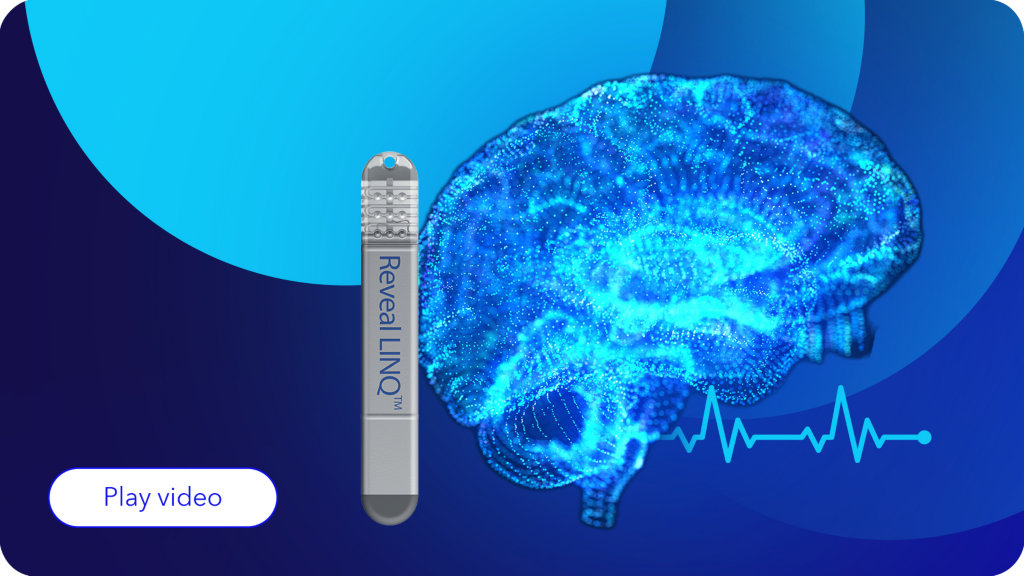
Reveal LINQ™ insertable cardiac monitor

<p>The Reveal LINQ™ ICM with AccuRhythm™ AI algorithms is for patients with infrequent symptoms requiring long-term cardiac monitoring.</p>

To view the indications, safety, and warnings, scroll down or click on one of the links below to jump you down the page to that product.

Reveal LINQ™ ICM ISW

Brief statement for Reveal LINQ™ insertable cardiac monitor (ICM) system and accessories

Indications

The Reveal LINQ™ insertable cardiac monitor (ICM) is an implantable patient-activated and automatically-activated monitoring system that records subcutaneous ECG and is indicated in the following cases:

  • patients with clinical syndromes or situations at increased risk of cardiac arrhythmias
  • patients who experience transient symptoms such as dizziness, palpitation, syncope and chest pain, that may suggest a cardiac arrhythmia.

The device has not been tested specifically for pediatric use.

Contraindications

There are no known contraindications for the implant of the Reveal LINQ™ ICM or its accessories. However, the patient’s particular medical condition may dictate whether or not a subcutaneous, chronically implanted device can be tolerated.

Warnings and precautions

Patients with the Reveal LINQ™ ICM should avoid sources of diathermy, high sources of radiation, electrosurgical cautery, external defibrillation, lithotripsy, therapeutic ultrasound and radiofrequency ablation to avoid electrical reset of the device, and/or inappropriate sensing as described in the Medical procedure and EMI precautions manual. MRI scans should be performed only in a specified MR environment under specified conditions as described in the Reveal LINQ™ MRI technical manual. 

Accessories available for use with Reveal LINQ™ ICM may experience connectivity or performance issues. See product manuals for details and troubleshooting instructions.

Potential adverse events or potential complications

Potential complications of the Reveal LINQ device include, but are not limited to, device rejection phenomena (including local tissue reaction), device migration, infection, and erosion through the skin.  

There are no known adverse events associated with the use of any Reveal LINQ™ ICM accessory.

See the device manuals for detailed information regarding the implant procedure, indications, contraindications, warnings, precautions, and potential complications/adverse events.  For further information, please call Medtronic at (800) 328-2518 (Technical Services) or (800) 551-5544 (Patient Services).

Caution: Federal law (United States) restricts prescription devices to sale by or on the order of a physician.

MAJ_90968


AccuRhythm™ AI Algorithms ISW

AccuRhythm AI ECG classification system brief statement

Indications

The intended use of the system is to reduce false positive cardiac arrhythmia episodes.

Contraindications

There are no known contraindications for AccuRhythm AI Models ZA400, ZA410, or ZA420.

Precautions

The AccuRhythm AI ECG classification system may incorrectly adjudicate a true positive episode as an AI false episode, causing that episode to be suppressed in the remote monitoring system.

See the device manual for detailed information regarding the intended use, contraindications, warnings, precautions, and potential complications/adverse events. For further information, Medtronic Technical Services at (800) 328-2518 and/or consult Medtronic’s website at www.medtronic.com.

Caution: Federal law (USA) restricts these devices to sale by or on the order of a physician.

MAJ_84705


Features

Powerfully small and simple

  • The Reveal LINQ™ ICM is one-third the size of a AAA battery (1.2 mL).
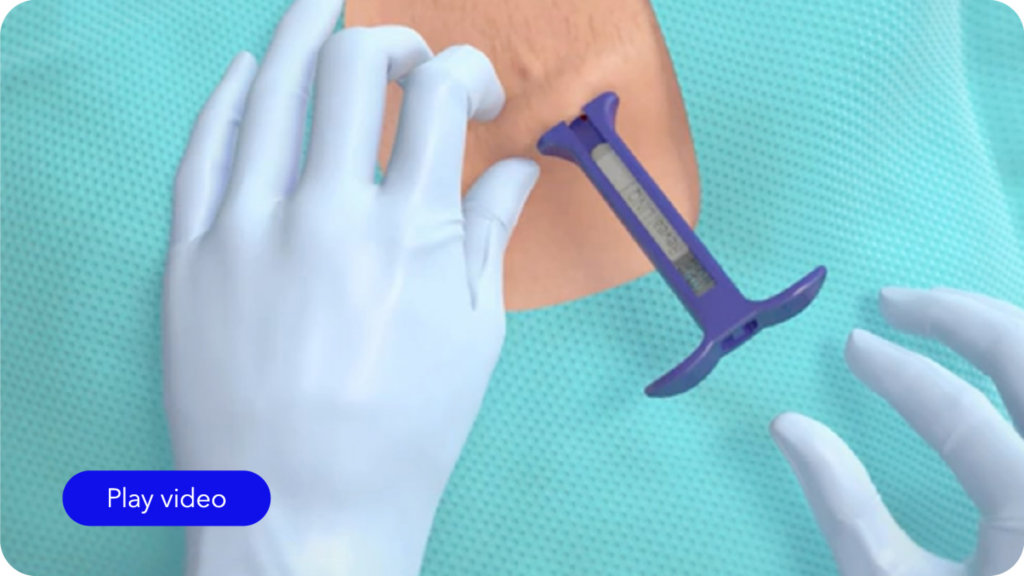
  • It has a minimally invasive, simplified insertion procedure.
  • The device is 1.5T and 3T MRI Conditional with no post-insertion waiting required.

Learn about:


This is an image of a Reveal LINQ™ insertable cardiac monitor (ICM) next to a AAA battery to compare size.

Not actual size


AccuRhythm™ AI algorithms 

Experience the difference of Reveal LINQ™ ICM with AccuRhythm™ AI algorithms for atrial fibrillation (AF) and Pause.


Exclusive services and solutions


This is an illustration of the Reveal LINQ™ Mobile Manager home screen on a tablet.

1. Streamline device programming and interrogation

Reveal LINQ™ mobile manager is a single, app-based solution for managing:

  • Device registration, activation, and CareLink™ pre-enrollment
  • Guided workflow animations
  • Integrated patient education

This is an image of the Reveal LINQ™ insertable cardiac monitor (ICM) with a yellow arrow going to the right.

2. One of the world’s smallest and most accurate ICMs1–3

Reveal LINQ™ ICM is part of the exclusive services and solutions designed to get you back to caring for patients.


View this illustration of the MyCareLink™ monitor with dots connecting to a network icon and an arrow pointing to the right.

3. Direct support for patient monitor connectivity issues

Medtronic Stay Connected service is a specialized patient service for monitor troubleshooting, connectivity issues, and other questions:

Direct patient line for fast service:
1-866-470-7709

7 a.m.–7 p.m. CT, Monday–Friday


This is a graphic representing the CareLink™ network, Medtronic Stay Connected and Get Connected services.

4. Customize alerts for clinically actionable reports

CareLink™ network is a remote monitoring network that enables data-driven care decisions:

  • CareAlert™ notifications allow for customized reports by clinic and/or individual patient.
  • Cardiac Compass™ report provides a 90-day view of patient cardiac data.
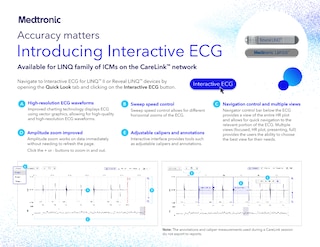
  • Interactive ECG viewer on the Quick Look tab provides tools such as calipers, annotations, and more to aid in clinical adjudication.

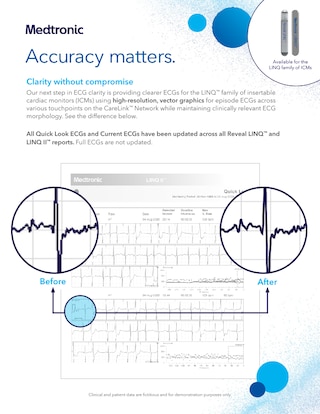
This is an image of the Reveal LINQ™ and LINQ II™ insertable cardiac monitors (ICMs) shown with an EKG strip behind them.

Clarity without compromise

ECG clarity on the LINQ™ family of ICMs platform offers a portfolio of enhancements including high-resolution, vector graphics and an advanced Interactive ECG viewer that provides additional tools and capabilities for ICM review.


Accuracy matters.

Detection algorithms
Maintain high detection sensitivity while reducing false episode review burden3

Proven technology
More than 1,000 published clinical articles and abstracts5

Small, discrete implant6
One-third the size of AAA battery (1.2 cc)

Fast, safe procedure
Less than five-minute insertion time7,8


Conditionally safe MRI access SureScan™ technology

Reveal LINQ™ ICM is MR Conditional at 1.5T and 3T with no post-insertion waiting required.


Reveal LINQ™ insertable cardiac monitor MRI conditions for use:
A patient with a Reveal LINQ™ ICM can be safely scanned in an MR system that meets the following conditions with no post-insertion waiting required. Failure to follow these conditions for use may result in a hazard to the patient during an MRI scan: 

  • Horizontal cylindrical bore magnet, clinical MRI systems with a static magnetic field of 1.5 Tesla (T) or 3T must be used.
  • Hydrogen proton MRI equipment must be used.
  • Maximum spatial gradient of the static magnetic field specification must be ≤ 25 T/m (2500 gauss/cm).
  • Whole body gradient systems with gradient slew rate specification must be ≤ 200 T/m/s per axis.
  • The Whole Body Specific Absorption Rate (WB-SAR) as reported by the MRI equipment must be ≤ 4.0 W/kg; the head SAR as reported by the MRI equipment must be ≤ 3.2 W/kg.
  • Do not use local transmit coils on the chest, trunk, or shoulder region.
  • There are no restrictions on the placement of receive-only coils, and there are no restrictions on the use of local transmit or receive coils for imaging of the head or extremities.

Clinical evidence

When patients have unexplained or intermittent symptoms with a suspected cardiac cause, 30 days of monitoring may not be sufficient. The Reveal LINQ™ ICM works continuously to capture comprehensive and actionable data over a longer period of time than short-term monitors to deliver superior yield that can increase the rate of diagnosis for patients with atrial fibrillation (AF), cryptogenic stroke, and unexplained syncope.


Diagnose syncope sooner.

  • Cardiologists are 3.6 times more likely to reach a diagnosis with ICMs vs. conventional monitors for unexplained syncope.¶,9
  • Between 70%–86% of patients diagnosed with ICMs would remain undiagnosed utilizing conventional monitoring strategies.#,10
     

Identify AF in high-risk patients.

Clinical evidence shows 84.5% of patients at high risk of stroke and AF would have had their AF diagnosis missed with a single-use, 30-day monitor.#,11 Cardiologists are 4.3 times more likely to reach an AF diagnosis with ICMs.9–13
 

Inform secondary stroke prevention strategies.

Up to 30% of patients with cryptogenic stroke may have previously undetected paroxysmal AF,14,15 but 30-day monitors fail to detect AF in 88% of these patients.#,14 When AF is detected by an ICM and treated, the risk of stroke recurrence is reduced by 55%.16
 

Manage AF with data-guided decisions.

Find more actionable data with the LINQ™ family of ICMs, which offers the highest AF detection accuracy rate of 99.7%.17 Continuous cardiac monitoring with the Reveal LINQ™ ICM captures AF burden, heart rate variability, and daily activity data to help cardiologists assess treatment effectiveness and determine when to try a new approach.


Ordering information

Item number Description
LNQ11 Reveal LINQ™ ICM


† Reference the Reveal LINQ™ ICM clinician manual for usage parameters.

‡ Reveal LINQ™ ICM has demonstrated to pose no known hazards in a specified MRI environment with specified conditions of use. Please see the Reveal LINQ™ ICM MRI technical manual for more details.

§ The validation study performance and time study results were projected onto 86,383 Reveal LINQ™ ICM patients to calculate false alert reduction per year in 200 Reveal LINQ™ ICM patients. 

◊ Estimated time savings was calculated based on 11.3 minutes per non-actionable ICM transmission.6   

¶ 2018 ESC Guidelines for Diagnosis and Management of Syncope defined conventional testing as undefined physician discretion for monitoring excluding ICM, external loop recorder, tilt test, EP study, Recurrent 12-lead ECG, or 7-day Holter monitor.

# Based on Kaplan-Meier estimates.

  1. Reveal LINQ™ insertable cardiac monitor clinical manual. Medtronic; 2015.
  2. Assert-IQ™ Model DM5000, DM5300, DM5500, insertable cardiac monitor manual. 2023.
  3. ICM accuracy comparison guide. Medtronic data on file. 2021.

  1. Radtke AP, Ousdigian KT, Koehler J, Margetta J, Han JK. PO-02-175 AI enables significant reduction of clinic review burden for legacy ICMs. Heart Rhythm. 2024;21(S5):S261. doi:10.1016/j.hrthm.2024.03.850.
  2. ICM size comparison guide. 2020. Medtronic data on file.
  3. ICM publications. 2023. Medtronic data on file.
  4. Rogers JD, Piorkowski C, Sohail MR, et al. Resource utilization associated with hospital and office-based insertion of a miniaturized insertable cardiac monitor: results from the RIO 2 randomized US study. J Med Econ. 2020;23(7):706–713. doi:10.1080/13696998.2020.1746548.
  5. Rogers JD, Sanders P, Piorkowski C, et al. In-office insertion of a miniaturized insertable cardiac monitor: Results from the Reveal LINQ In-Office 2 randomized study. Heart Rhythm. 2017;14(2):218–224. doi:10.1016/j.hrthm.2016.11.001.
  6. Brignole M, Moya A, de Lange FJ, et al. 2018 ESC Guidelines for the diagnosis and management of syncope. Eur Heart J. 2018;39(21):1883–1948. doi:10.1093/eurheartj/ehy037.
  7. Rogers JD, Higuera L, Rosemas SC, Cheng YJ, Ziegler PD. Diagnostic sensitivity and cost per diagnosis of ambulatory cardiac monitoring strategies in unexplained syncope patients. PLoS One. 2022;17(6):e0270398. doi:10.1371/journal.pone.0270398.
  8. Reiffel JA, Verma A, Kowey PR, et al. Rhythm monitoring strategies in patients at high risk for atrial fibrillation and stroke: A comparative analysis from the REVEAL AF study. Am Heart J. 2020;219:128–136. doi:10.1016/j.ahj.2019.07.016.
  9. Healey JS, Alings M, Ha A, et al. Subclinical atrial fibrillation in older patients. Circulation. 2017;136(14):1276–1283. doi:10.1161/CIRCULATIONAHA.117.028845.
  10. Philippsen TJ, Christensen LS, Hansen MG, Dahl JS, Brandes A. Detection of subclinical atrial fibrillation in high-risk patients using an insertable cardiac monitor. JACC Clin Electrophysiol. 2017;3(13):1557–1564. doi:10.1016/j.jacep.2017.06.020.
  11. Sanna T, Diener HC, Passman RS, et al. Cryptogenic stroke and underlying atrial fibrillation. N Engl J Med. 2014;370;26:2478–2486. doi:10.1056/NEJMoa1313600.
  12. Brachmann J, Morillo CA, Sanna T, et al. Uncovering atrial fibrillation beyond short-term monitoring in cryptogenic stroke patients: three-year results from the cryptogenic stroke and underlying atrial fibrillation trial. Circ Arrhythm Electrophysiol. 2016;9(1):e003333. doi:10.1161/CIRCEP.115.003333.
  13. Tsivgoulis G, Katsanos AH, Mac Grory B, et al. Prolonged cardiac rhythm monitoring and secondary stroke prevention in patients with cryptogenic cerebral ischemia. Stroke. 2019;50(8):2175–2180. doi:10.1161/STROKEAHA.119.025169.
  14. TruRhythm detection algorithms. 2017. Medtronic data on file.