
Surgical robotics training and education
By Zach McDowell, MD, Assistant Professor of Urology, Wake Forest University School of Medicine

Robotic surgery has transformed urology in a remarkably short period of time. When I was a resident at Baylor just over a decade ago, we performed many kidney surgeries purely laparoscopically. By the time I completed my fellowship with Dr. Jim Porter in Seattle, a year dedicated exclusively to robotic surgery, the field had already shifted dramatically. Today, a resident in my own program can count on one hand their laparoscopic cases in five years of training. We simply don't do much of it anymore. Robotics has taken over, and the pace of that change isn't slowing down.
That context matters when I talk about the Hugo™ robotic-assisted surgery (RAS) system, which I've been using at High Point Medical Center for the past several months. The Hugo™ RAS system isn't just another platform to add to the equipment list; it represents a meaningful step forward in how we train surgeons and deliver care.
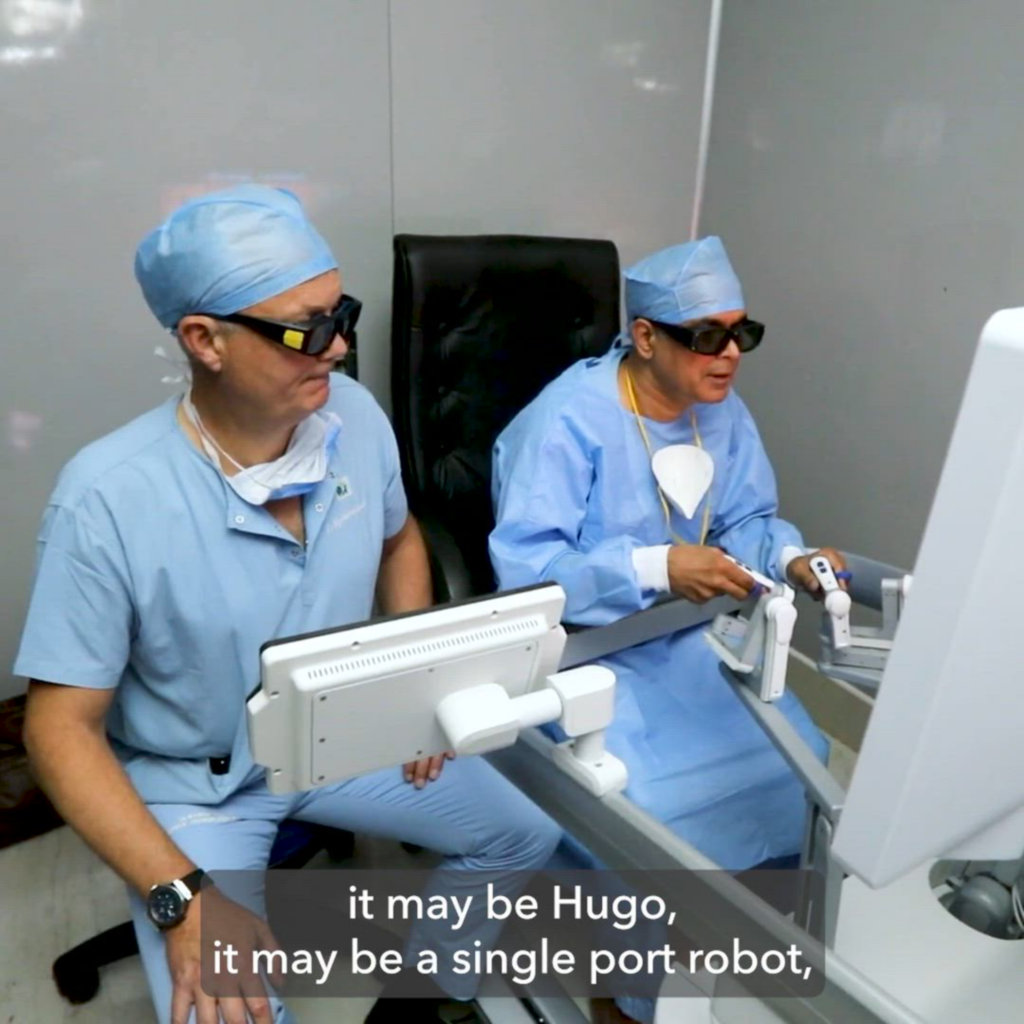
One of the most immediately noticeable differences with the Hugo™ RAS system is the open console. On the platforms most of us trained on, you put your head into a closed headset and, in a sense, disappear from the room. You're visually isolated, which works well enough when you're operating solo, but doesn’t support a collaborative teaching environment.
With the Hugo™ RAS system, I'm wearing 3D glasses and looking at a large open screen. I can see my residents. I can see the OR staff. When I'm bedside assisting while a resident operates, they can glance over at me without breaking their workflow. That might sound like a small thing, but in surgical training, real-time correction is important.


In a traditional open surgery, the attending and the resident are standing across the table from each other, watching the same field. The attending can immediately demonstrate or redirect. A closed robotic console disrupted that dynamic. Unless there are two consoles, one person is at the console and the other is at the bedside. The closed console makes that communication clunky: the resident has to stop, pull their head out, turn around, listen, turn back, and re-engage.
The Hugo open console eliminates that friction. The resident can turn their head slightly, make eye contact, get the correction, and keep going. It's a closer approximation of the real-time, side-by-side teaching dynamic that open surgery allows and that matters enormously when you're trying to help someone master a specific movement or instrument technique.
One of my core responsibilities as an attending surgeon is to prepare residents for what they'll face when they're on their own. I spent four years in private practice before moving to academic medicine, and when I was in the OR, it was just me. No attending. Sometimes no second physician at all. The training I received had to be good enough to get me through difficult anatomy, unexpected adhesions, and cases that didn't go as planned.
That's the bar I hold myself to as a teacher. And part of meeting that bar today means exposing residents to multiple robotic platforms, not just the one we've used for years. Hospital systems vary. Not every facility has the same equipment. If a graduating resident encounters the Hugo™ RAS system for the first time at their new job, I want them to be comfortable enough to operate from day one, not spending clinic time or OR time getting up to speed.
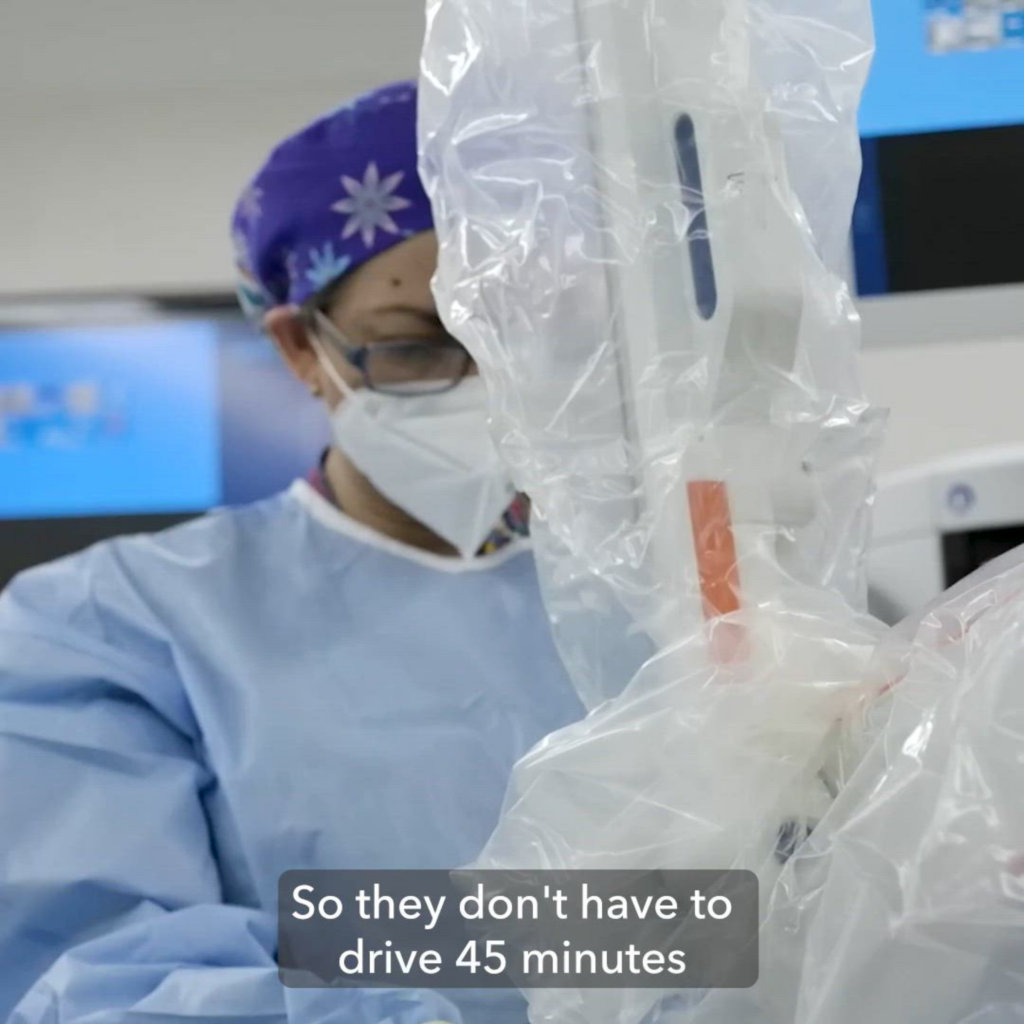
With the modular arm design of Hugo, each arm is positioned independently around the patient rather than extending from a single platform. This introduces residents to a different way of thinking about port placement and surgical setup. It's a skill that will serve them as technology continues to evolve.


The Hugo™ RAS system opens up exciting capabilities I simply haven't had access to anywhere else. The Touch Surgery™ ecosystem, for example, lets me send surgical videos directly to residents before a case so they can study the procedure in advance. That kind of asynchronous, pre-operative preparation can make a real difference in how ready a trainee is when they step into the room.
Looking further ahead, I think robotic surgery training will increasingly incorporate AI-assisted guidance. For instance, overlaying CT imaging onto live surgical video to help identify vasculature or navigate complex anatomy in real time. Many companies are working on advancements like these, and systems designed with openness and adaptability in mind will be the ones best positioned to incorporate them.
Assistant Professor of Urology, Wake Forest University School of Medicine
Stay updated on the Hugo™ RAS system.
Sign up now to continue learning from the experts who are building best practices in
RAS training and program development.
More articles

