For women, it’s not TAVI, it’s Evolut™

Medtronic has invested in the first-ever randomized, head-to-head trial comparing Evolut™ TAVI and SAPIEN™* TAVI systems in patients with small aortic annuli. This patient population is predominantly women, who are often underrepresented and understudied in clinical trials.2


Diagnosing severe aortic stenosis in women can be more challenging

This contributes to less frequent and delayed referral for intervention compared to men.1,3-6 Based on published data, women are 12%–35% less likely to receive AVR.*1,7–10

What you need to know

Sex-related differences in pathophysiology and clinical presentation exist, complicating diagnosis and contributing to less frequent and delayed referral for intervention compared to men.1,4,11,12 Based on published data, women are up to 35% less likely than men to be treated with AVR.5

Women Gender-specific differences in aortic stenosis2 Men
  • Shortness of breath, dizziness, syncope, fatigue
  • Older
  • More advanced heart failure symptoms
Clinical presentation
  • Angina
  • Younger
  • Less advanced heart failure symptoms
  • Fibrocalcific aortic stenosis, less aortic valve calcification
  • Concentric hypertrophy
  • Paradoxical low-flow/low-gradient AS
Pathophysiology
  • Calcific aortic stenosis, more aortic valve calcification
  • Eccentric hypertrophy
  • High-gradient or classical low-flow/low-gradient AS
Smaller annulus
Anatomy Larger annulus

Adapted from: Ana C. Iribarren et al. (2022)11 and Snir, A. D. et al. (2021)13


Valve choice matters. It’s not TAVI, it’s Evolut™

Through 2 years,
Evolut™ TAVI maintains superior valve performance vs. SAPIEN™* TAVI in women with small annuli.‡2


Significantly less BVD†,§ 
with Evolut™ TAVI

vs. SAPIEN™* TAVI in women with small annuli‡,2
p < 0.001

Tavi chart image

27.5x lower mean gradient

≥ 20 mmHg in women with small annuli at 2 years2
p < 0.001

Tavi chart image

Know the difference,
make a difference
for woman with aortic stenosis.


Discover resources to help you make a difference

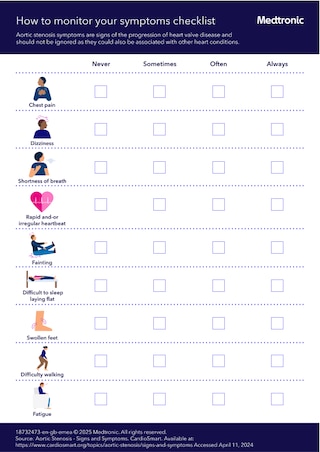
A patient booklet to aid timely diagnosis and management


Contact us to make a difference

*Indicates Required Field

Your information will be processed and protected in accordance with our privacy statement

Selecting “no” to marketing emails above will not affect your other email selections, and a Medtronic representative will still reach out via email, if selected. Your personal data will used to manage your relationship with Medtronic, and, if you consent, to provide you with relevant email updates based on your user preferences. You can opt-out of receiving such emails at any time by clicking the unsubscribe link in the relevant email. Medtronic may use pixels and other technologies in emails to gather statistics around email opening and clicks, to help us improve our communications and to provide you with relevant content. For more information, see the Medtronic privacy notice.

You can always change your preferences or update your personal details by visiting the Preference center.

See the Preference center


* Calculated from 1 as inverse adj. OR of 1.49 for men to receive AVR, from 7 as OR of 0.65 for women to receive AVR, from 8 as HR of 0.68 for women to receive AVR, from 9 as HR of 0.88 for women to undergo AVR and from 10 as HR of 0.8 for women to receive AVR

† Valve performance as defined as freedom from bioprosthetic valve dysfunction (BVD) through 24 months. BVD is defined as a composite including any of the following: hemodynamic structural valve dysfunction (mean gradient ≥ 20 mmHg), non-structural valve dysfunction (severe prothesis-patient mismatch or ≥ moderate aortic regurgitation), clinical thrombosis, endocarditis, and aortic valve reintervention.

‡ In patients with small annuli (area ≤ 430 mm2 ) in all-comers trial, consisting of majority low surgical risk participants (52.1%)

§ BVD is bioprosthetic valve dysfunction

1. Tribouilloy C, et al. Excess Mortality and Undertreatment of Women With Severe Aortic Stenosis. J Am Heart Assoc. 2021 Jan 5;10(1):e018816. doi: 10.1161/JAHA.120.018816. Epub 2020 Dec 29. PMID: 33372529; PMCID: PMC7955469.

2. Bleiziffer, S. Two-Year Outcomes for Women in the Five-Year SMART Trial. Presented at American Heart Association Scientific Sessions 2025, Nov 7-10, New Orleans, LA.

3. Chaker Z, Badhwar V, Alqahtani F, Aljohani S, Zack CJ, Holmes DR, Rihal CS, Alkhouli M. Sex differences in the utilization and outcomes of surgical aortic valve replacement for severe aortic stenosis. J Am Heart Assoc 2017;6.

4. Cote N, Clavel MA. Sex differences in the pathophysiology, diagnosis, and management of aortic stenosis. Cardiol Clin 2020;38:129138.

5. Vahanian, A. et al. 2021 ESC/EACTS Guidelines for the management of valvular heart disease: Developed by the Task Force for the management of valvular heart disease of the European Society of Cardiology (ESC) and the European Association for Cardio-Thoracic Surgery (EACTS). Eur. Hear. J. 43, ehab395- (2021).

6. Bach D et al., Prevalence, referral patterns, testing, and surgery in aortic valve disease: leaving women and elderly patients behind? J. Heart Valve Dis 16 (2007) 362–369.

7. Rice CT, Barnett S, O’Connell SP, et al. Impact of gender, ethnicity and social deprivation on access to surgical or transcatheter aortic valve replacement in aortic stenosis: a retrospective database study in England. Open Heart 2023;10:e002373. doi:10.1136/ openhrt-2023-002373

8. Paquin, A., Annabi, M. S., Bienjonetti-Boudreau, D., Pibarot, P. & Clavel, M. A. Increased mortality and intervention delay in female patients with severe aortic stenosis and reduced ejection fraction undergoing aortic valve replacement. Can. J. Cardiol. 37, e2 (2021).

9. David Bienjonetti-Boudreau, Marie-Ange Fleury, Martine Voisine, Amélie Paquin, Isabelle Chouinard, Mathieu Tailleur, Raphael Duval, Pierre-Olivier Magnan, Jonathan Beaudoin, Erwan Salaun, Marie-Annick Clavel, Impact of sex on the management and outcome of aortic stenosis patients, European Heart Journal, Volume 42, Issue 27, 14 July 2021, Pages 2683–2691, https://doi.org/10.1093/eurheartj/ehab243

10. Lowenstern A, et al. Sex disparities in patients with symptomatic severe aortic stenosis. Am Heart J. 2021 Jul;237:116-126. doi: 10.1016/j.ahj.2021.01.021. Epub 2021 Mar 17. PMID: 33722584

11. Ana C. Iribarren, et al., Sex differences in aortic stenosis: Identification of knowledge gaps for sex-specific personalized medicine, American Heart Journal Plus: Cardiology Research and Practice, Volume 21,2022,100197,ISSN 2666-6022, https://doi.org/10.1016/j.ahjo.2022.100197

12. Nau DP, et al. Am J Med. 2005;118:1256–1261.

13. Snir, A. D. et al. Prevalence and Outcomes of Low‐Gradient Severe Aortic Stenosis—From the National Echo Database of Australia. J. Am. Hear. Assoc. 10, e021126 (2021).

™*Third party brands are trademarks of their respective owners. All other brands are trademarks of a Medtronic company.