| Item number | Description | Units per box |
|---|---|---|
| RESPARRAYAHA01 | RespArray™ patient monitor — AHA (American Heart Association) version | 1 |
| RESPARRAYKITAHA | RespArray™ patient monitor bundle | 1 |


Continuous patient monitoring
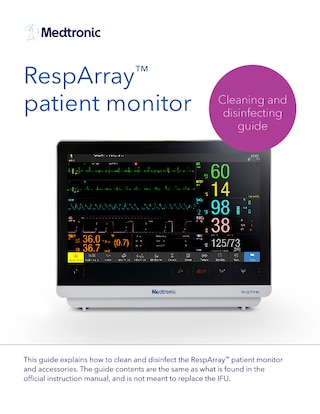
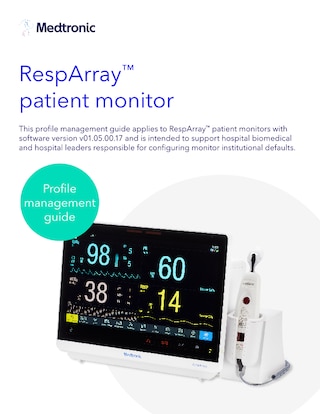
The RespArray™ patient monitor can help continuously monitor SpO₂, etCO₂, ECG, and temperature, measure NiBP, and connect wirelessly to EMR via HL7.
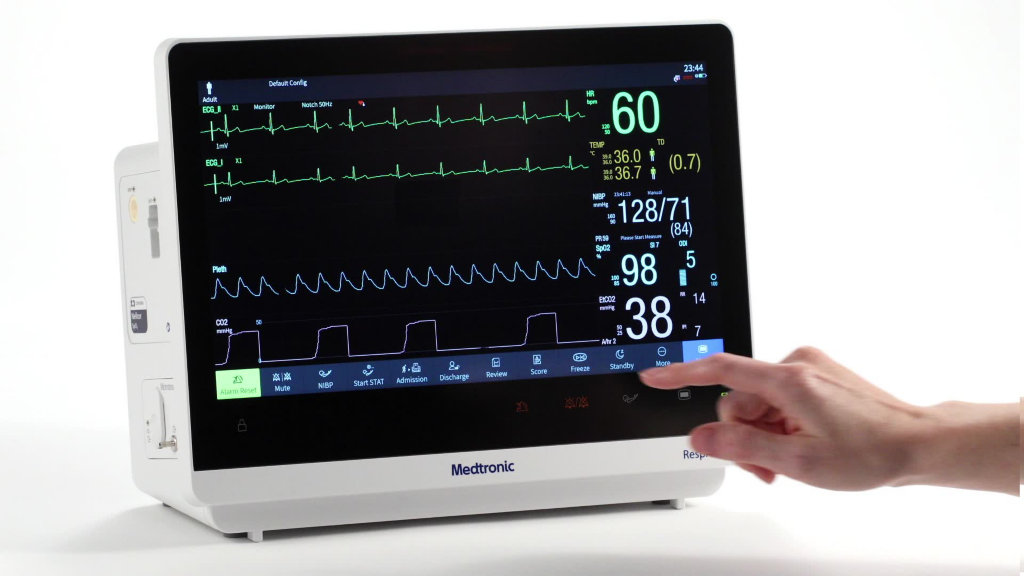
The RespArray™ patient monitor features simple connectivity and seamlessly integrates into workflow. You’ll have more time to focus on your patients.
96%
On average, medical-surgical registered nurses spend 96% of their shift away from the patient’s bedside.1

Experience world-class Nellcor™ pulse oximetry and Microstream™ capnography technologies, designed to detect respiratory compromise early — and help reduce alarm fatigue.
53%
The Smart Alarm for Respiratory Analysis™ (SARA) in Microstream™ technology reduces unnecessary nuisance alarms by 53%.2

Your dedicated white-glove service team is with you every step of the way. Customizable plans and service options are tailored to fit your needs.
$535K
Average amount that continuous monitoring of high-risk patients may help a median-sized hospital save annually†,3

The RespArray™ patient monitor has the following algorithms: Integrated Pulmonary Index™ algorithm, Nellcor™ SatSeconds technology, Apnea-Sat Alert™ algorithm (A/hr and ODI), Smart Breath Detection (SBD) algorithm, and Smart Alarm for Respiratory Analysis algorithm. CCHD is also included for the IEC-certified monitor.
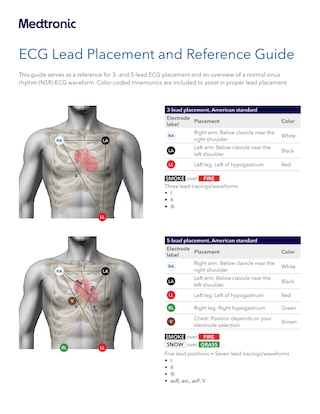
The RespArray™ patient monitor includes MEWS (Modified Early Warning Scores), NEWS (National Early Warning Score), NEWS2 (National Early Warning Score 2), and PEWS (Pediatric Early Warning Score). Please consult the instructions for use (IFU) to select the desired score system.
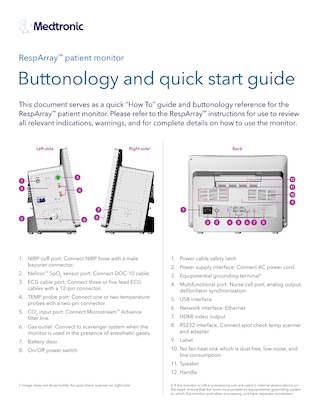
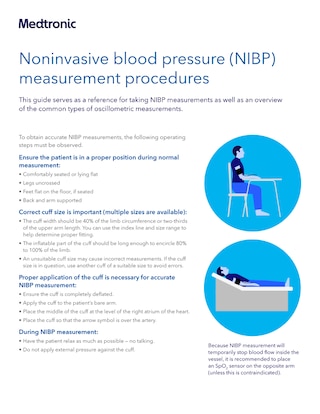
The RespArray™ patient monitor uses a single tube (single lumen) blood pressure (BP) hose and is set up to receive one tube bayonet for both reusable and disposable cuffs.
When the RespArray™ patient monitor is integrated and connected with the Vital Sync™ system, you can generate an “apneas per hour” patient report. Clinicians may want to review apneas for patients in their unit to better understand their condition, make assessments on supplemental oxygen needs, or sleep study evaluations. This report could also be useful if an “apneas per hour” assessment is required for patient discharge.
Monitors with V 01.05.00.17 or later are compatible with the Nellcor™ Analytics Tool software, enabling SpO2 and pulse rate data to be exported into an overnight desaturation report.
The RespArray™ patient monitor provides a dedicated nurse call port which can be connected to a nurse call system. The nurse call interface type is a PS2 connector. To activate the nurse call function, please consult the IFU.
You can export patient trend data onto a USB drive. The monitor also supports HL7 protocol to output data to HIS (hospital information systems) like EMR for patient record keeping, or the Vital Sync™ system for remote patient monitoring. Please refer to the IFU for details on how to export and upload data from the RespArray™ patient monitor.
No. The RespArray™ patient monitor does not contain an additional internal coin-cell battery along with the replaceable battery that comes standard with the monitor. If the replaceable battery is removed while being powered by battery only (no AC power), the monitor will completely shut down.
| Item number | Description | Units per box |
|---|---|---|
| RESPARRAYAHA01 | RespArray™ patient monitor — AHA (American Heart Association) version | 1 |
| RESPARRAYKITAHA | RespArray™ patient monitor bundle | 1 |
Select a module below to watch an interactive video.
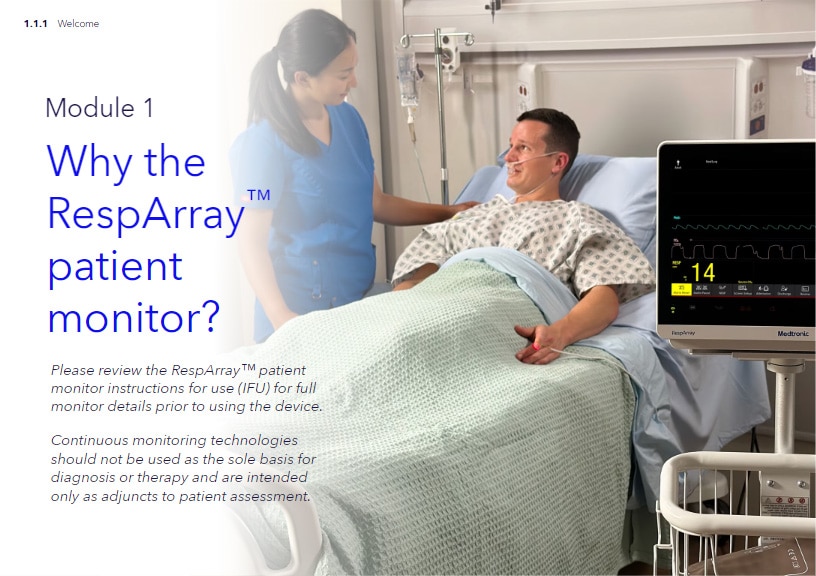
Module 1: Why the RespArray™ patient monitor?
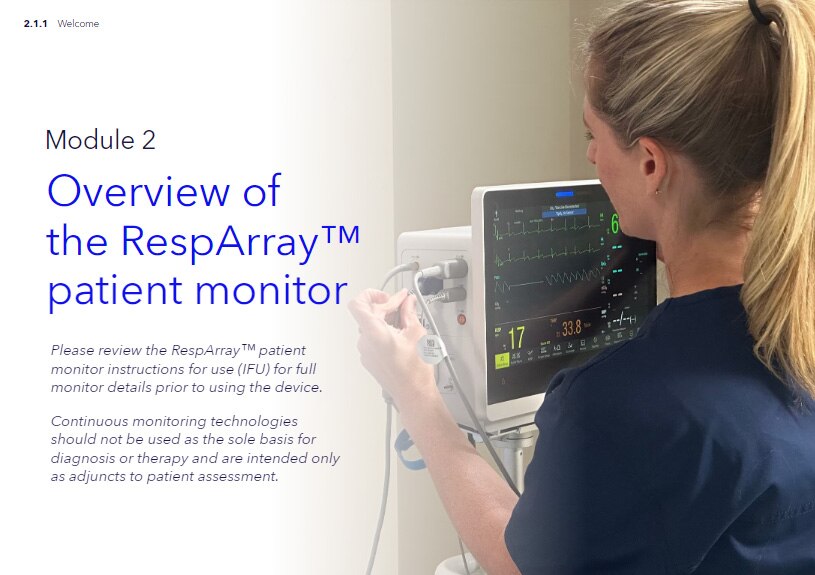
Module 2: Overview of the RespArray™ patient monitor
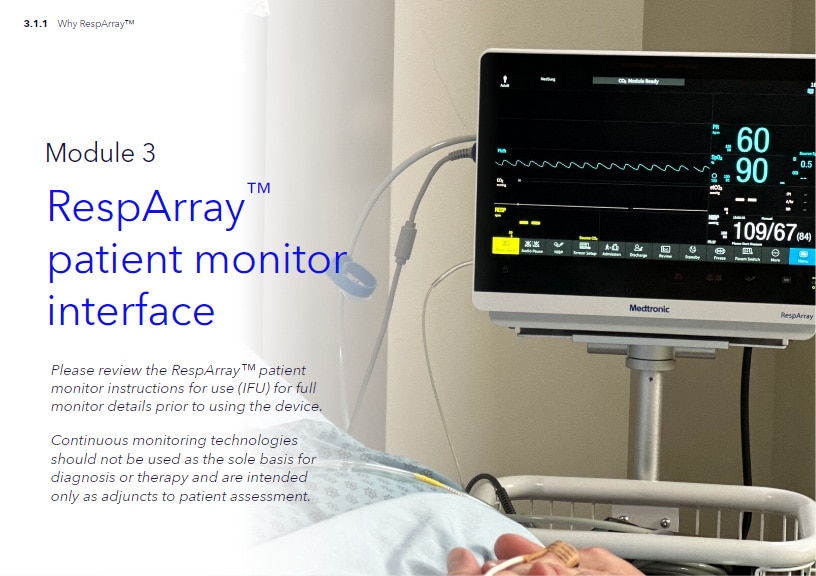
Module 3: RespArray™ patient monitor interface
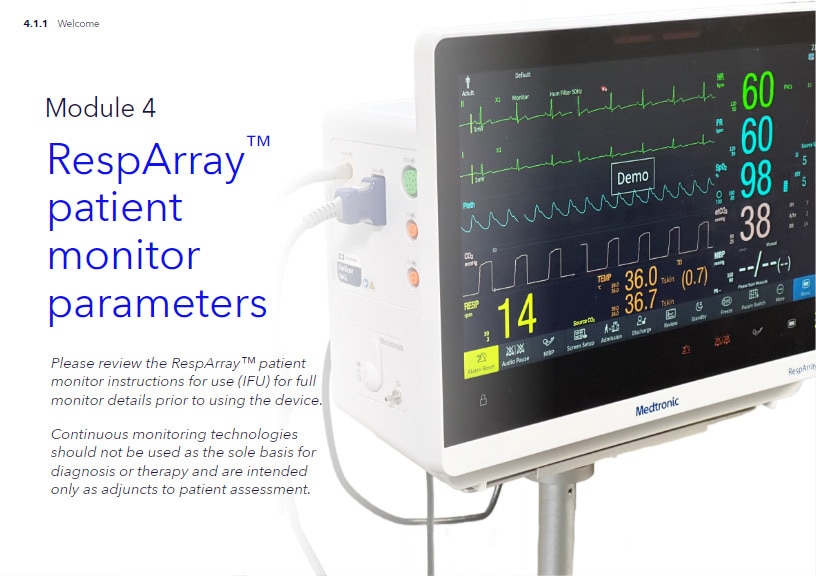
Module 4: RespArray™ patient monitor parameters
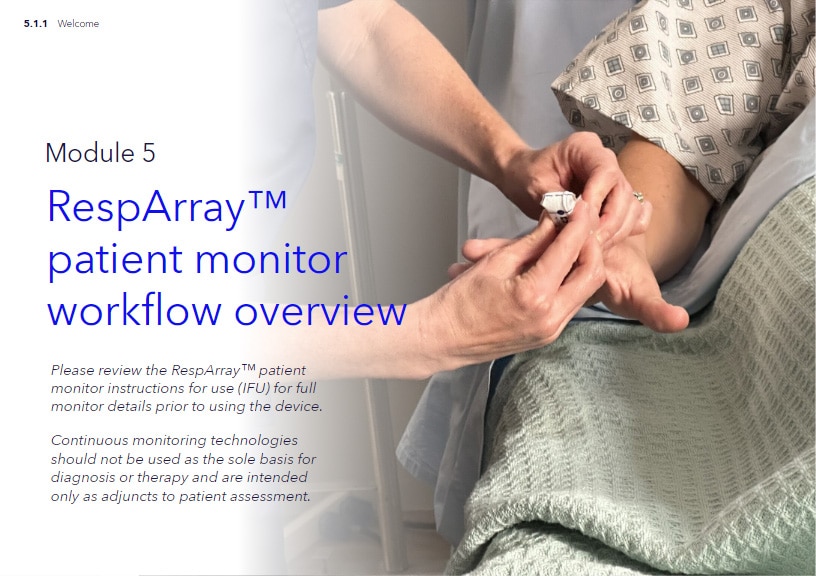
Module 5: RespArray™ patient monitor workflow overview
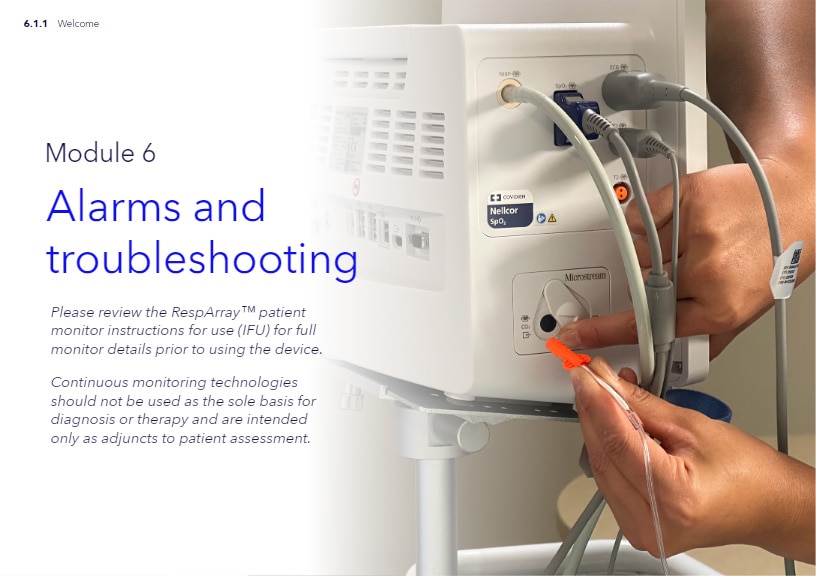
Module 6: Alarms and troubleshooting
| Item number | Description | Units per box |
|---|---|---|
| RESPARRAYAHA01 | RespArray™ patient monitor — AHA (American Heart Association) version | 1 |
| RESPARRAYKITAHA | RespArray™ patient monitor bundle | 1 |
| Item number | Description | Units per box |
|---|---|---|
| RESPARRAYIEC01 | RespArray™ patient monitor — IEC (International Electrotechnical Commission) version | 1 |
| Item number | Description | Units per box |
|---|---|---|
| RESPARRAY-KIT-DE1 | RespArray™ patient monitor | 1 |
| Item number | Description | Units per box |
|---|---|---|
| RESPARRAY-KIT-FR1 | RespArray™ patient monitor | 1 |
| Item number | Description | Units per box |
|---|---|---|
| RESPARRAY-KIT-IT1 | RespArray™ patient monitor | 1 |
| Item number | Description | Units per box |
|---|---|---|
| RESPARRAY-KIT-NL1 | RespArray™ patient monitor | 1 |
| Item number | Description | Units per box |
|---|---|---|
| RESPARRAY-KIT-SP1 | RespArray™ patient monitor | 1 |

Microstream™ Advance filter lines are available in sizes to accommodate neonate to adult patients and can be used in virtually all clinical settings.

Microstream™ Luer sampling lines are engineered with Uni-junction™ technology to help enable effective sampling from both nares and the mouth.

The Nellcor™ Max-Fast™ forehead SpO₂ sensor with OxiMax™ technology is an effective option when digit sensors fail to obtain SpO₂ signals.

The Nellcor™ OxySoft™ SpO₂ sensor is the first pulse oximetry sensor to use a silicone adhesive to protect fragile skin and improve repositionability.

The Nellcor™ Philips A04 SPM module with OxiMax™ technology helps provide measurement of arterial oxygen saturation.

The Nellcor™ SoftCare™ nonadhesive SpO₂ sensor is ideal for patients with sensitive skin.


The Nellcor™ bedside SpO₂ patient monitor with home care and sleep study mode provides at-a-glance access to real-time patient respiratory status information.

The Nellcor™ bedside respiratory patient monitoring system provides easy access to the status of a patient’s oxygenation and respiration.

The Nellcor™ flexible reusable SpO₂ sensor is a versatile sensor for short-term, continuous monitoring in a broad range of patient sizes.

The Nellcor™ portable SpO₂ patient monitor is a convenient, handheld pulse oximeter ideal for spot-checks or continuous monitoring.

Nellcor™ reusable SpO₂ sensors with OxiMax™ technology are sensor options for spot checks or short-term monitoring.
† This assumes a 20% respiratory depression reduction and an annual general care floor volume of 2,447 patients receiving opioids per median-sized hospital. 90% of surgical patients and 45% of medical patients on U.S. general care floors receive opioids. Continuous pulse oximetry and capnography device pricing assumptions used list pricing for the following: a Capnostream™ 35 portable respiratory monitor prorated over seven years; a Microstream™ capnography filter line, and a disposable Nellcor™ pulse oximetry sensor, resulting in $52.73 in device costs per continuously monitored patient stay on a medical surgical floor. For intermittent pulse oximetry monitoring, device pricing consisted of a multiparameter monitor prorated over seven years and a reusable pulse oximetry sensor, resulting in $0.68 in device costs per patient stay. Additional information on pricing and assumptions are available in the study publication.