Comprehensive ECMO solutions
Medtronic offers a broad and integrated portfolio of technologies designed to support clinicians across the full continuum of ECMO therapy.
Built to perform in demanding clinical environments, our solutions include devices designed for ECMO — devices that help simplify care, expand access to therapy, and support the path to recovery.
Through ongoing innovation and close collaboration with clinicians, hospitals, and professional societies, we remain committed to advancing ECMO care.

ECMO system
Designed for simplicity and performance, the VitalFlow™ ECMO system can be configured to accommodate your clinical preferences and hospital protocols.1

ECMO oxygenators
Innovative flow-path design and real-time device diagnostic capabilities are designed for ECMO performance.†,2

ECMO access solutions
Catheters designed for the duration and support requirements of patients on VV and/or VA ECMO3
- Crescent™ jugular dual-lumen catheter
- Crescent™ RA jugular dual-lumen catheter
- Bio-Medicus Life Support™ catheter
ECMO stories

The journey of ECMO is more than a clinical process — it’s a story of innovation, the struggle of challenging conventional thinking, and an unwavering commitment to care.
This video series offers an inside look at the evolution of ECMO, the expertise behind it, and the purpose that continues to drive it forward.
History of ECLS
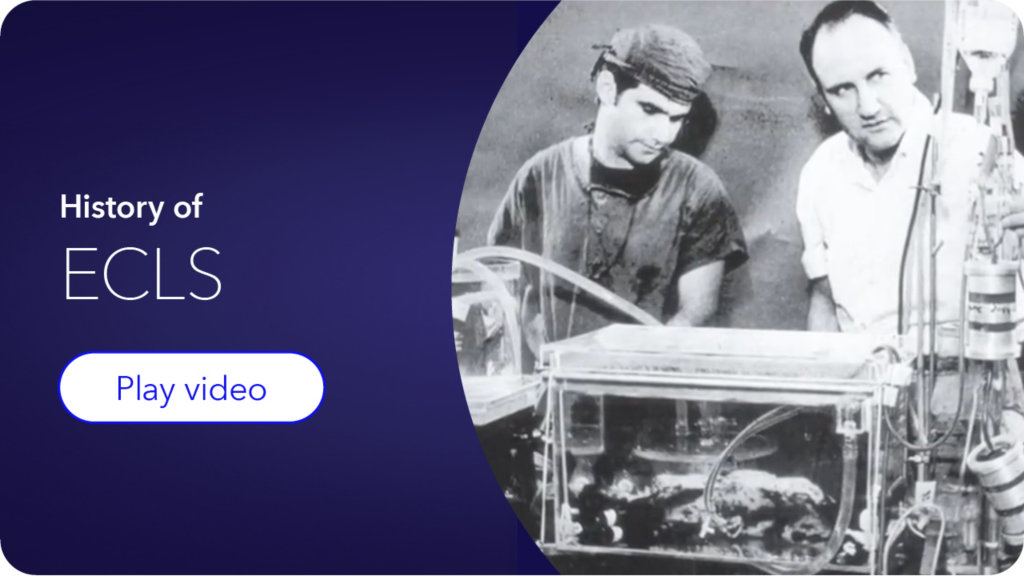
Role of engineering

Ben’s journey from ECMO to IRONMAN finisher
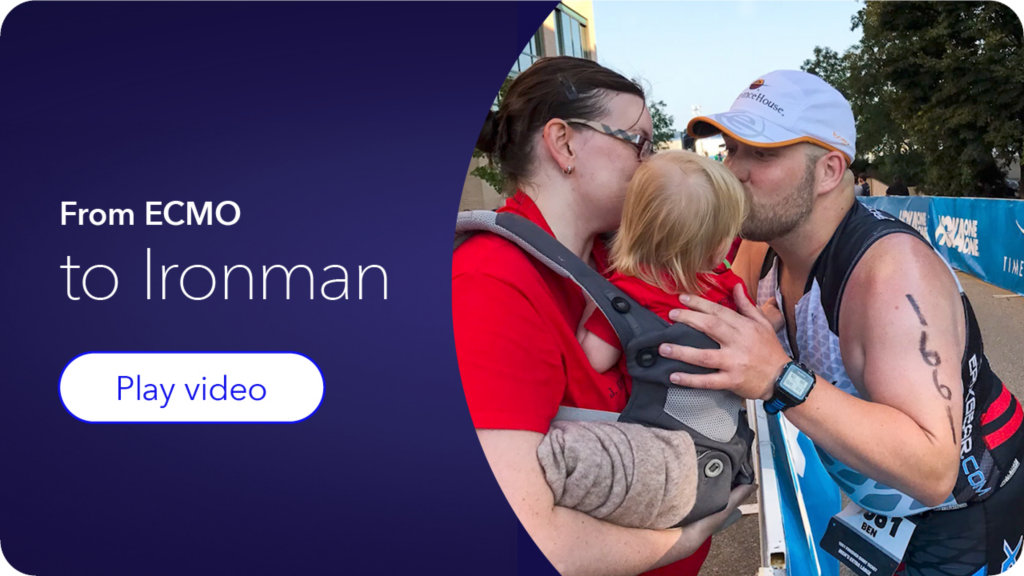
Carlos and Grace’s COVID-19 journey — from ECMO to marriage

Starting an ECMO center


Medtronic Academy
Find additional feature information along with a variety of educational resources and tools.
Cardiovascular Lifeline Technical Services
- Phone: 877-526-7890
- Phone: 763-526-7890
Potential complications related to the use of ECMO devices include, but are not limited to, heart, vessel, or lung damage, hypoxia, anemia, irritation, toxic reaction, infection, hemorrhage, liver or kidney failure, stroke, and death. The benefits of extracorporeal support must be weighed against the risk of systemic anticoagulation and must be assessed by the prescribing physician.
The benefits of catheterization for extracorporeal circulation must be weighed against the risk of systemic anticoagulation and subsequent propensity for hemorrhage.
† Indicated in the United States for use up to 48 hours.
- Medtronic design verification data on file. Data may not be indicative of clinical performance.
- Data on file. Design verification and validation reports. These tests may not be indicative of clinical performance.
- Data on file. Design verification report. These tests may not be indicative of clinical performance.