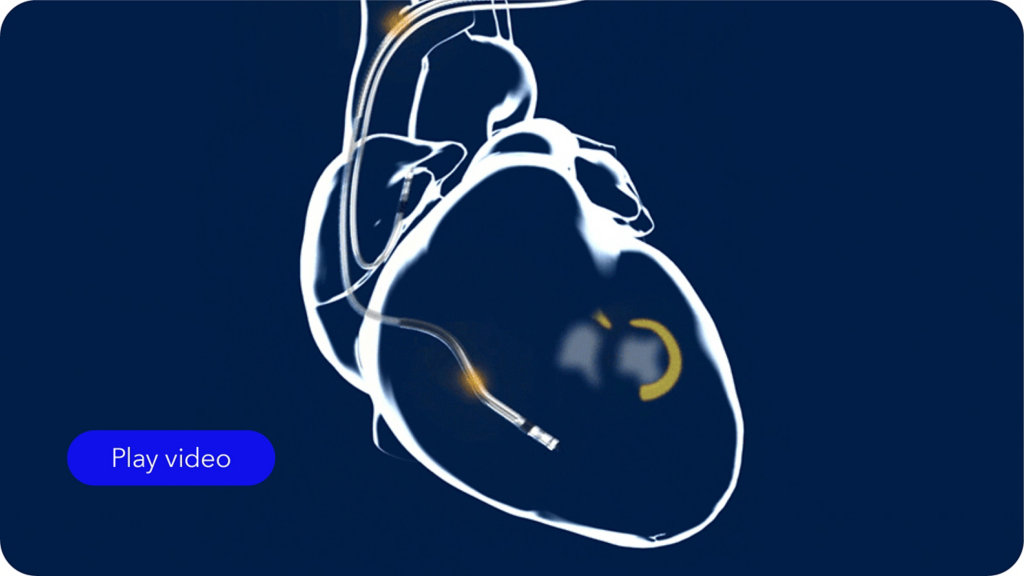
Implantable Pulse Generators (IPG) ISW
Brief statement: Medtronic IPG
Indications
Implantable Pulse Generators (IPGs) are indicated for rate adaptive pacing in patients who may benefit from increased pacing rates concurrent with increases in activity and increases in activity. Pacemakers are also indicated for dual chamber and atrial tracking modes in patients who may benefit from maintenance of AV synchrony. Dual chamber modes are specifically indicated for treatment of conduction disorders that require restoration of both rate and AV synchrony, which include various degrees of AV block to maintain the atrial contribution to cardiac output and VVI intolerance (e.g., pacemaker syndrome) in the presence of persistent sinus rhythm. See device manuals for the accepted patient conditions warranting chronic cardiac pacing. Antitachycardia pacing (ATP) is indicated for termination of atrial tachyarrythmias in patients with one or more of the above pacing indications.
MRI SureScan IPGs: A complete SureScan pacing system is required for use in the MR environment and includes a Medtronic SureScan device connected to Medtronic SureScan Leads.
Contraindications
IPGs are contraindicated for concomitant implant with another bradycardia device and concomitant implant with an implantable cardioverter defibrillator. There are no known contraindications for the use of pacing as a therapeutic modality to control heart rate. The patient's age and medical condition, however, may dictate the particular pacing system, mode of operation, and implant procedure used by the physician. Rate-responsive modes may be contraindicated in those patients who cannot tolerate pacing rates above the programmed Lower Rate. Dual chamber sequential pacing is contraindicated in patients with chronic or persistent supraventricular tachycardias, including atrial fibrillation or flutter. Asynchronous pacing is contraindicated in the presence (or likelihood) of competition between paced and intrinsic rhythms. Single chamber atrial pacing is contraindicated in patients with an AV conduction disturbance. Antitachycardia pacing (ATP) therapy is contraindicated in patients with an accessory antegrade pathway. Medtronic Kappa™ 400 Series pacemakers are contraindicated for use with epicardial leads and with abdominal implantation.
Warnings and precautions
Changes in a patient's disease and/or medications may alter the efficacy of the device's programmed parameters. Patients should avoid sources of magnetic and electromagnetic radiation to avoid possible underdetection, inappropriate sensing and/or therapy delivery, tissue damage, induction of an arrhythmia, device electrical reset or device damage. Do not place transthoracic defibrillation paddles directly over the device.
MRI SureScan IPGs only: No lead extenders, lead adaptors or abandoned leads present; no broken leads or leads with intermittent electrical contact as confirmed by lead impedance history; the device must be operating within the projected service life, and the system must be implanted in the left or right pectoral region. For pacemaker-dependent patients, it is not recommended to perform an MRI scan if the right ventricular (RV) lead pacing capture threshold is greater than 2.0 V at 0.4 ms. Patients whose device will be programmed to an asynchronous pacing mode when MRI SureScan is on must have no diaphragmatic stimulation at a pacing output of 5.0 V and at a pulse width of 1.0 ms. It is not recommended to perform MRI scans during the lead maturation period (approximately 6 weeks). Pace polarity parameters are set to Bipolar for programming MRI SureScan to On (Advisa MRI only); or a SureScan pacing system is implanted with a lead impedance value of ≥ 200 Ω and ≤ 1500 Ω. Revo MRI patients must have pacing capture thresholds of ≤ 2.0 V at a pulse width of 0.4 ms and a SureScan pacing system that has been implanted for a minimum of 6 weeks.
Potential complications
Potential complications include, but are not limited to, rejection phenomena, erosion through the skin, muscle or nerve stimulation, oversensing, failure to detect and/or terminate arrhythmia episodes, and surgical complications such as hematoma, infection, inflammation, and thrombosis.
MRI SureScan IPGs: SureScan pacing systems have been designed to minimize potential complications in the MRI environment. Potential MRI complications include, but are not limited to, lead electrode heating and tissue damage resulting in loss of sensing or capture or both, or MR-induced stimulation on leads resulting in continuous capture, VT/VF, and/or hemodynamic collapse.
See the device manual for detailed information regarding the implant procedure, indications, contraindications, warnings, precautions, and potential complications/adverse events. See the appropriate product MRI SureScan Technical Manual before performing an MRI Scan. For further information, please call Medtronic at 1-800-328-2518 and/or consult www.medtronic.com or www.mrisurescan.com.
Caution: Federal law (USA) restricts these devices to sale by or on the order of a physician.
MAJ_84705