
Transcatheter Aortic Valve Implantation (TAVI)
Treating symptomatic severe aortic stenosis
Learn about treatment options for symptomatic severe aortic stenosis (ssAS). An urgent Referral can save lives.
Learn about treatment options for symptomatic severe aortic stenosis (ssAS). An urgent Referral can save lives.
If left untreated, average patient survival is just 50% at two years.12
Aortic stenosis is among the most common of all valvular heart diseases and continues to increase as our population ages.13 ssAS can be fatal if left untreated.
Once symptoms begin, survival is cut short.12

“Mortality difference for people with symptoms of aortic stenosis treated with aortic valve replacement versus those not undergoing this procedure is one of the most striking in medicine.“13
For women, the difference in survival is even starker.
If women do receive treatment, they have a lower mortality rate,14 excellent outcomes compared to SAVR,15 and superior valve performance to the SAPIEN™* platform.16
Patients with ssAS: operated versus unoperated ssAS survival rates13,17

You can help save more lives by recognizing the symptoms of ssAS early on.
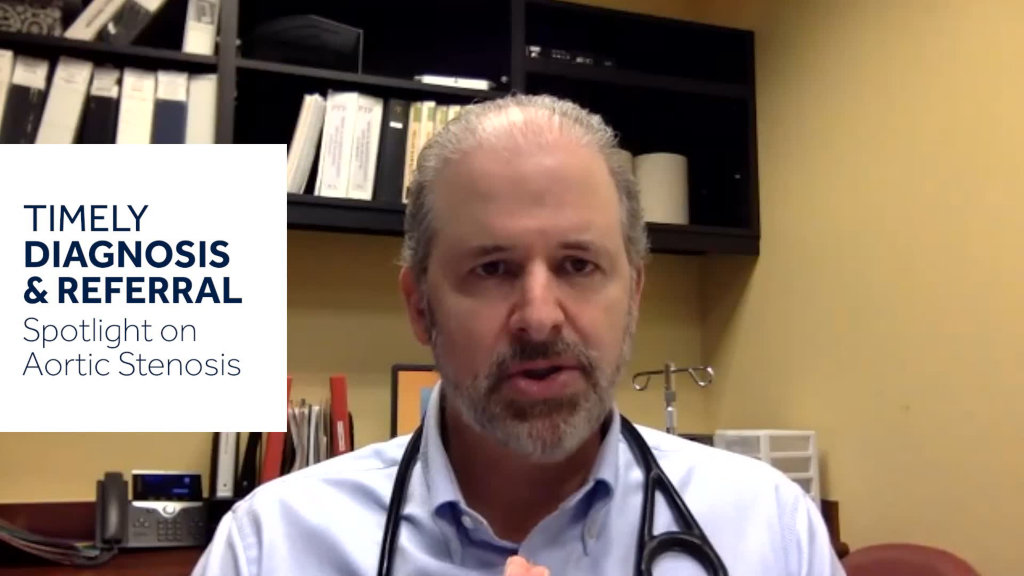
Learn about determining the severity of aortic stenosis and when to refer patients to the heart team.

Experts share their experiences assessing and treating patients with severe aortic stenosis.
“Class 1B recommendation for intervention: Patients with symptomatic severe high-gradient aortic stenosis, low-flow, low-gradient aortic stenosis with reduced ejection fraction, AND evidence of flow reserve. Class 1B and 1C recommendation for intervention: Expanded to asymptomatic severe aortic stenosis patients, considering a careful heart team evaluation of their treatment need."*
90%
of patients with heart valve disease are influenced by conversations with their doctor when making ssAS treatment decisions.18
Inquiries about referring patients or becoming a study site?
LinkedIn: Medtronic Cardiac and Vascular
* Vahanian, A., Beyersdorf, F., et al. (2021), 2021 ESC/EACTS Guidelines for the management of valvular heart disease: Developed by the Task Force for the management of valvular heart disease of the European Society of Cardiology (ESC) and the European Association for Cardio-Thoracic Surgery European Heart Journal, 2021;, ehab395, https://doi.org/10.1093/eurheartj/ehab395
We do not review or control the content of external sites and are not responsible for any interactions or transactions that may occur there. Any product availability and regulatory requirements on the destination site may differ depending on your location. When you continue, the terms of use and privacy statement of the external site will apply.
Product availability and regulatory requirements may differ depending on your location. The destination website is governed by the laws and regulations of the country in which it operates, which may be different from those in your country. When you continue, the terms of use and privacy statement of the destination Medtronic site will apply.