Transcatheter aortic valve implantation (TAVI)
SMART Trial
SMall Annuli Randomized To Evolut™ or SAPIEN™*
For small annulus† patients, the SMART Trial data are clear: Evolut™ transcatheter aortic valve implantation (TAVI) delivers superior valve performance‡ versus SAPIEN™* TAVI with excellent patient outcomes through three years.1
The SMART Trial was a prospective, multicenter, randomized controlled trial conducted to understand how valve design differences between the Medtronic self-expandable (SE) Evolut™ platform and Edwards Lifesciences balloon-expandable (BE) SAPIEN™* transcatheter aortic valve implantation system affect treatment of small aortic annulus (≤ 430 mm2) patients with symptomatic, severe native-aortic stenosis.
The latest data reported through two years reinforce that these contemporary TAVs behave differently in this patient group, providing physicians with crucial insights to tailor treatment decisions according to individual patient needs.

Evolut™ TAVI continues to demonstrate superior valve performance‡ compared to SAPIEN™* TAVI and strong patient outcomes with significantly lower rates of valve thrombosis.§
More than 1 in 2 patients† are expected to experience BVD‡
with SAPIEN™* TAVI
within 3 years1
p < 0.001
Evolut™ TAVI: 16.3%
SAPIEN™* TAVI: 54.4%


Sustained excellent patient outcomes through 3 years1
Evolut™ TAVI: 25.4% | SAPIEN™* TAVI: 22.6% p = 0.44 | Hazard ratio, 1.13 (95% CI: 0.83, 1.53)
Clinical outcome composite: All-cause mortality, disabling stroke, or heart failure rehospitalization
6x more clinical valve thrombosis§
with SAPIEN™* TAVI
through 3 years in small annulus patients.†,1
p = 0.008
Evolut™ TAVI: 0.6%
SAPIEN™* TAVI: 3.7%
3.4x more ≥ moderate PPM
with SAPIEN™* TAVI
at 30 days in small annulus patients.†,◊,1
p < 0.001
Evolut™ TAVI: 9.9%
SAPIEN™* TAVI: 33.2%

Women’s hearts are different and so is their AS journey. While women are typically underrepresented in major clinical trials,3 the SMART Trial enrolled predominantly women due to its focus on small annulus patients. The SMART Trial is the largest, randomized controlled TAVI trial to primarily enroll women — providing important clinical insights into this patient population.
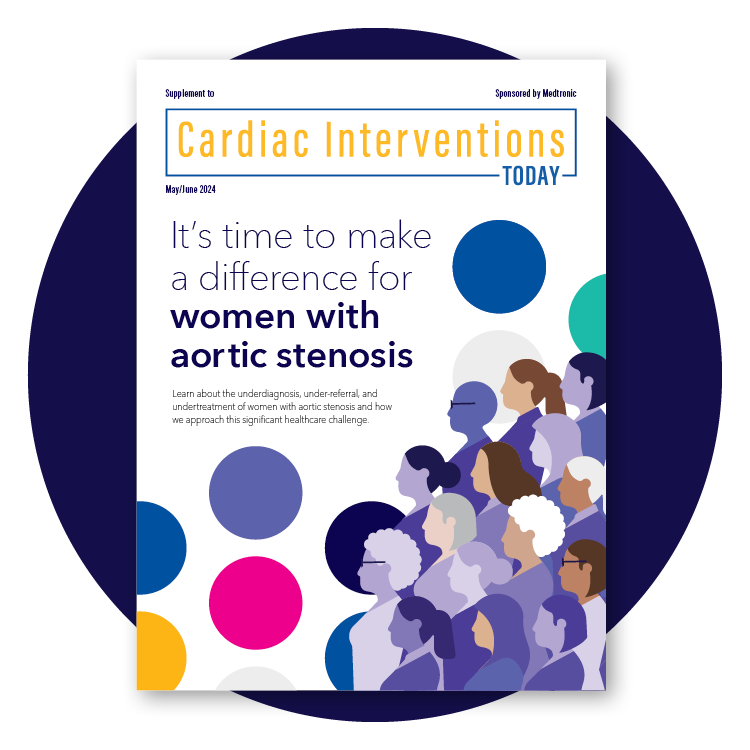
Drs. Sabine Bleiziffer, Renuka Jain, Roxana Mehran, and Puja Parikh examine the significant healthcare challenge that is the underdiagnosis, under-referral, and undertreatment of women with aortic stenosis.
Read their thoughts on how we address this, what role the heart team plays, and how the groundbreaking SMART Trial is making a difference.
Check out the current supplement issue of Cardiac Interventions Today.
Visit clinicaltrials.gov for more information on the SMART Trial. Use identifier number NCT04722250 to see details on the trial.
The Medtronic CoreValve™/Evolut™ platform is supported by a robust body of clinical evidence. Explore our evidence summaries and real-world data.

The Confida™ Brecker guidewire is specifically designed for transcatheter aortic valve implantation (TAVI) procedures.

The Evolut™ FX transcatheter aortic valve implantation (TAVI) system sets new expectations for precision, control, and predictability in TAVI procedures.

The Evolut™ FX+ transcatheter aortic valve system is designed with specific features intended to enable lifetime management solutions such as coronary access.

The Evolut™ PRO+ TAVI system features the lowest delivery profile for 23–29 mm valves and advanced sealing with an external tissue wrap on all valve sizes.
Devices used: Evolut™ PRO+ 78.0%, Evolut™ PRO 17.1%, Evolut™ FX 4.3%, Evolut™ R 0.6%; SAPIEN™* 3 Ultra 80.8%, SAPIEN™* 3 19.2%.
TM* Third-party brands are trademarks of their respective owners. All other brands are trademarks of a Medtronic company.
† In patients with small annuli (area ≤ 430 mm2) in all-comers trial, consisting of majority low surgical risk participants (52.1%).
‡ Valve performance as defined as freedom from bioprosthetic valve dysfunction (BVD) through 24 months. BVD is a composite including any of the following: hemodynamic structural valve dysfunction (mean gradient ≥ 20 mmHg), nonstructural valve dysfunction (severe prothesis-patient mismatch or ≥ moderate aortic regurgitation), clinical thrombosis, endocarditis, and aortic valve reintervention.
§ Prosthetic valve thrombosis as defined as a composite of clinical and sub-clinical valve thrombosis.
◊ Hemodynamic structural valve dysfunction.
¶ Valve performance means the valve works better after TAVI, with improved blood flow. The SMART study defined valve performance as freedom from bioprosthetic valve dysfunction (BVD) at 12 months. BVD is a composite including any of the following: hemodynamic structural valve dysfunction (mean gradient ≥ 20 mmHg), nonstructural valve dysfunction (severe prosthesis patient mismatch or ≥ moderate aortic regurgitation), thrombosis, endocarditis, and aortic valve reintervention.
We do not review or control the content of external sites and are not responsible for any interactions or transactions that may occur there. Any product availability and regulatory requirements on the destination site may differ depending on your location. When you continue, the terms of use and privacy statement of the external site will apply.
Product availability and regulatory requirements may differ depending on your location. The destination website is governed by the laws and regulations of the country in which it operates, which may be different from those in your country. When you continue, the terms of use and privacy statement of the destination Medtronic site will apply.